The Rhododendron Festival Bhutan 2026 invites you to experience Bhutan’s spring at its most colorful and vibrant. Set amid the misty mountain forests of the Royal Botanical Park in Lamperi near the iconic Dochula Pass, this annual celebration brings together nature, culture, and local traditions in a truly scenic Himalayan setting.
Visitors can wander through trails bursting with blooming rhododendrons, interact with local communities, and enjoy lively cultural performances that reflect Bhutan’s rich heritage. Whether you are a nature lover, photographer, or cultural traveler, the Lamperi Rhododendron Festival 2026 offers a refreshing and memorable way to explore the natural beauty of Bhutan during the peak of spring.
Location: Royal Botanical Park, Lamperi (Dochula Pass), Bhutan
Dates: 13th – 14th April 2026
Duration: 2 days
Best time to visit: Both days (Peak bloom & cultural programs)
Festival type: Nature & cultural festival
Main attraction: Blooming of over 40+ species of rhododendrons in the Royal Botanical Park
Guided Nature Hikes: Explore scenic forest trails with park rangers and discover blooming rhododendrons in their natural habitat, each identified with scientific and local names.
Rhododendron Exhibition: Enjoy curated indoor and outdoor displays showcasing the rich diversity and vibrant colors of Bhutan’s national flower at the Royal Botanical Park Rhododendron Festival.
Eco-Awareness Programs: Learn about biodiversity, conservation, and climate change through engaging workshops and interactive sessions.
Traditional Cultural Performances: Experience authentic Bhutanese culture with mask dances (Cham), folk songs, and lively performances by local communities and students during the Dochula Rhododendron Festival 2026.
Traditional Bhutanese Games: Witness or take part in archery and Khuru (traditional darts), offering a fun glimpse into local traditions.
Local Food Experience: Taste authentic Bhutanese cuisine such as Ema Datshi, Puta, and Suja, prepared by local villagers.
Arts & Crafts Market: Browse handmade Bhutanese products including textiles, bamboo crafts, and wood carvings.
Day 01. Arrival at Paro – Thimphu: Sightseeing (Elevation 2320m | 50km | 1hr.)
Day 02. Thimphu: Sightseeing (Elevation 2320m)
Day 03. Thimphu – Punakha: Attend Rhododendron Festival in Lamperi (Elevation 1200m | 76km | 3hrs.)
Day 04. Punakha: Sightseeing (Elevation 1200m)
Day 05. Punakha – Paro: Sightseeing (Elevation 2280m | 124km | 25mins.)
Day 06. Paro: Hike to Tiger’s Nest (Elevation 2280m)
Day 07. Paro Departure (Elevation 2280m)
Touch down in Paro! Representative from Bhutan Mystical Tours will receive you in the airport. Drive to Thimphu, the capital city of Bhutan.
On the way see Tamchog Monastery built by Thangthong Gyalpo, the iron bridge builder who came to Bhutan in 1433 looking for Iron Ore. He built 108 bridges across Tibet and Bhutan, out of which 8 were built in Bhutan.
On reaching Thimphu, drive uphill to Kuensel Phodrang where sits a massive sized Statue of Buddha Dordenma. It is made of bronze and is 169 ft. tall. You can get a spectacular view of Thimphu valley from this point.
Next, visit to the National Memorial Chorten, a monument dedicated to the Third King of Bhutan, His Majesty King Jigme Dorji Wangchuck.
Later, head to Tashichho Dzong (Fortress), which houses the throne room of the king and the offices of the government.
Overnight in Thimphu
Dive deeper into the Thimphu city.
The day begins with a visit to National Zoo which where the Takins, Bhutan’s national animal is preserved.
While returning, you may visit Dupthop Lhakhang which is known to be one of the few surviving nunneries in Bhutan.
Next, visit National Library to see a vast collection of ancient texts and scriptures. The library is a treasure trove for those interested in Bhutanese history and culture.
Later visit National institute for Zorig Choesum (13 traditional arts) the painting School is on your next list. Bhutanese tradition has been preserved through painting and sculptures. Thangkas, the sacred Buddhist religious scrolls are either painted or embroidered on high-quality fabrics.
Walk for a minute to Folk Heritage Museum where you can explore the craftsmanship of Bhutan’s rural past.
Driving down to the city, visit National Postal Museum, which is worth a visit for you can get your own picture on Bhutanese stamp right then and there. Get a photo clicked then and there or give a photo of your dear ones and you will get personalized stamps in 5 minutes.
Explore the popular Centenary Farmers Market if you’re there on a weekend, this bustling market is a great place to experience local life and try fresh produce.
Overnight in Thimphu
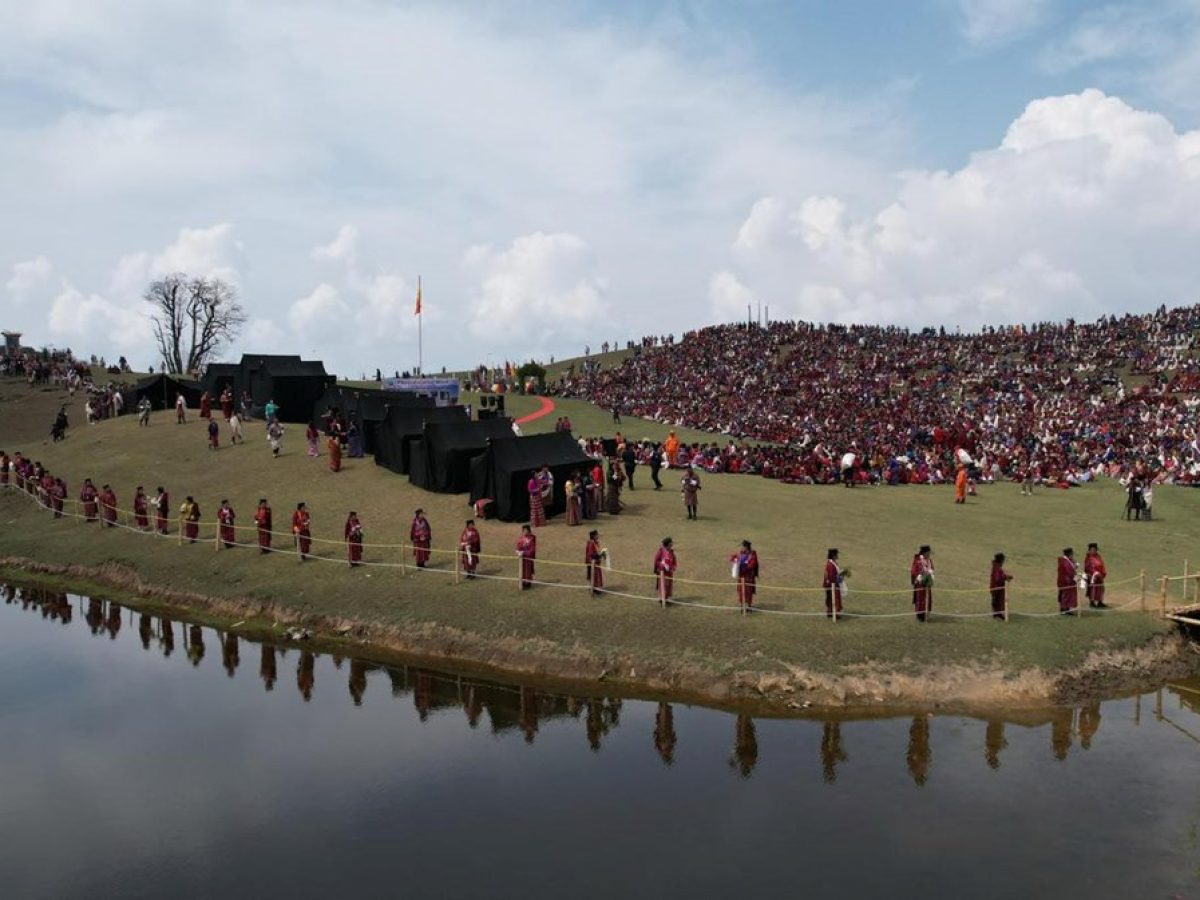
The day begins with a breathtaking drive over the Dochula Pass (3,100m), where you can admire 108 memorial chortens against a backdrop of Himalayan peaks. Upon arriving at the festival in Lamperi, visitors are greeted by vibrant traditional mask dances (Cham) and folk songs performed by local communities. These performances, including the famous “Tiger and Bear” dances, celebrate the harmony between the Bhutanese people and their pristine environment.
Mid-day is dedicated to exploration and taste. You can join guided botanical walks through moss-covered trails to witness rare rhododendrons in shades of scarlet, pink, and white. Between walks, visit the community food stalls to sample authentic high-altitude cuisine, such as buckwheat pancakes and Ema Datshi (chili and cheese). The festival atmosphere is further livened by traditional games like archery and Khuru (darts), which guests are often encouraged to try.
The afternoon offers a peaceful conclusion at the sacred Baritsho Lake within the park. Here, you can enjoy a quiet boat ride or relax by the water to spot rare Himalayan birds like the Fire-tailed Sunbird. For those seeking a bit more activity, the park’s various hiking trails offer a final chance to photograph the “King of Flowers” in its natural habitat before heading to Punakha.
Overnight in Punakha
Start with a short hike to Chimi Lhakhang, which was built by Lama Drukpa Kuenley also known as “The Divine Madman”, in the year 1499. The Temple is also known as “the Temple of Fertility”.
Visit the beautiful Punakha Dzong built in 1637 by Zhabdrung Ngawang Namgyal and is situated at the confluence of the Pho Chu (Male River) and the Mo Chu (Female River). War materials captured during the various battles with Tibetans are preserved here. Punakha served as a capital of Bhutan till the year of 1955.
In the afternoon, a short excursion to Khamsung Yulley Namgyal Choling Monastery in Punakha. This hike offers not just a spiritual retreat but also an exhilarating hiking experience. The hiking is moderate, making it suitable for families and casual trekkers.
Later in the evening, take a walk across the longest suspension bridge in Bhutan (160 m). The bridge is the longest of its kind and connects the two sides of the Pho chu river. You will get a great view of the river, valley, temple, and a good boost of adrenaline as well.
Overnight in Punakha
Drive to Paro.
Visit to Rimpung Dzong (fortress) also known as “Heap of Jewel” built in the year of 1646 as the Centre of administrative and religious authority in this valley.
Visit Ta Dzong built in 1656 and renovated in 1968, an ancient watchtower, which now has been converted as the National Museum.
Later, a visit to the Drukgyel Dzong which was built by Zhabdrung Ngawang Namgyel in 1644 to commemorate the victory over the Tibetan invaders. In the evening, free to stroll in the town for leisure and photography.
Overnight in Paro
Dedicate your final day to a delightful excursion to the Tiger’s Nest, locally known as Taktsang Monastery. Reaching Takshang Monastery is as much an adventure as the destination itself. The journey typically begins in the town of Paro, where visitors can embark on a trek that takes them through lush pine forests and past cascading waterfalls. The trail to the monastery is approximately 6 kilometers round trip, with a steep ascent that can take anywhere from 2 to 4 hours, depending on one’s pace and physical condition. The hike is challenging but incredibly rewarding.
On returning to the base, a Bhutanese cuisine experience in the woods is a celebration of both food and nature. It offers a unique way to engage with Bhutan’s rich culinary traditions while
surrounded by the tranquility and beauty of the natural world.
At the end of the day, we recommend you have a Traditional hot stone bath to get relaxed after a tiring day. It is not only practiced as a comforting leisure but also to treat various diseases. You can stroll down the Paro town where you can always find Bhutanese authentic handicrafts which can be good souvenirs and remembrances of this exotic and serene Himalayan Kingdom ‘Bhutan’.
Overnight in Paro
Our guide will drop you at Paro international airport as per your flight schedule. Farewell for your onwards journey.
The cost listed below includes the Sustainable Development Fee (SDF) of US $100 per person per night and the Bhutan visa fee of US $40 per person.
US $ 1,654 per person
Yes, there is a standard entry fee for the Royal Botanical Park, Lamperi, where the festival is held. For international tourists, the entry fee is typically Nu. 100 (approximately $1.20 USD). However, if you are visiting as part of a pre-paid organized tour, this entrance fee is almost always already included in your tour package price by your travel agent.
Attendees can enjoy scenic forest trails adorned with blooming rhododendrons, cultural performances, traditional crafts, and local delicacies, offering a blend of nature and culture
The park is accessible via a 30 minutes drive from Thimphu towards Punakha. Private taxis or guided tours can be arranged for visitors .
The festival celebrates Bhutan’s rich biodiversity, featuring over 46 species of rhododendrons, with 29 species found within the Royal Botanical Park Lamperi. It emphasizes environmental conservation and offers an immersive experience into Bhutan’s natural heritage
It’s best to book your trip at least 6 months or early in advance.
Yes, most of our travelers visit Bhutan on private tours, choosing their own dates and trip duration. While Bhutan does allow independent travel, we strongly recommend using a guide, driver and private vehicle throughout your stay to ensure a smoother and more informative experience.
Absolutely! The Royal Botanical Park Rhododendron Festival offers stunning scenery perfect for photography. Capture vibrant rhododendron blooms, traditional dances, and panoramic views of Lamperi, making it a photographer’s paradise while attending the Rhododendron Festival Bhutan 2026.
You can exchange the following currencies at the Bank of Bhutan and Bhutan National Bank:
• US Dollar
• Euro
• British Pound
• Japanese Yen
• Swiss Franc
• Hong Kong Dollar
• Canadian Dollar
• Australian Dollar
• Singapore Dollar
• Danish Krone
• Norwegian Krone
• Swedish Krone
Yes! The Lamperi Rhododendron Festival 2026 is family-friendly, with safe walking trails, colorful blooms, and cultural performances that kids will enjoy. Children can explore the park, learn about Bhutanese traditions, and experience the joy of nature up close.
Yes, the Rhododendron festival Bhutan 2026 tour can easily be customized to match your travel plans and interests. Bhutan tours are usually private and guided, which allows you to adjust the itinerary before or after the festival. You can extend the trip to 10–12 days to explore places like Trongsa and Bumthang in central Bhutan.
This festival tour package usually includes airport transfers, accommodation, meals, a licensed guide, private transportation, sightseeing fees, and all required travel permits in Bhutan.
During a Rhododendron festival Bhutan 2026 tour, travelers usually stay in comfortable 3-star government-approved hotels, local guesthouses, or traditional farmhouses. Most rooms are twin sharing with attached bathrooms and basic modern amenities. The 4-star or 5-star hotels can also be arranged on request.
Visa processing for the Bhutan festival tour is usually handled by your licensed Bhutanese tour operator like Bhutan Mystical Tours as part of the tour booking. Travelers need to arrange the visa in advance before arriving in Bhutan.
Basic visa process:
Currently, only 2 airlines operate international flights to Bhutan: Drukair (Royal Bhutan Airlines) and Bhutan Airlines. All flights arrive at Paro International Airport, Bhutan’s only international airport. For more information about routes and schedules, Click here
The Sustainable Development Fee (SDF) is a mandatory daily fee that international visitors must pay when traveling to Bhutan. It supports Bhutan’s “High Value, Low Volume” tourism policy and helps protect the country’s culture and environment.
Key points about the SDF:
The most common way to pay for a Bhutan tour is through an international wire transfer in USD. Some tour operators may also offer additional payment options depending on their policies.
Main payment method:
Yes, discounts may be available on the Rhododendron festival Bhutan 2026 tour, mainly depending on group size and traveler category. While the Sustainable Development Fee (SDF) is fixed by the government, tour operators may offer reduced prices on the tour package (hotels, transport, and guide).
Typical discounts include:
