The Domkhar Tshechu Festival is a special event in Bhutan when locals and visitors gather to celebrate centuries-old traditions. Held at Domkhar Lhakhang in the peaceful Chumey Valley of Bumthang, the festival brings the community together with sacred mask dances, blessings, and vibrant rituals. It’s not just a religious event, but also a joyful occasion where families, monks, and travelers connect through Bhutan’s rich culture. If you’re planning a trip, the Domkhar Tshechu Festival 2027 is one of the most memorable cultural experiences you can witness in Bhutan.
Location: Domkhar Lhundrup Choling Lhakhang, Chumey Valley, Bumthang District, Bhutan
Dates: 16th – 18th April 2027
Duration: 3 days (festival)
Best days to attend: Final day (unfurling of the sacred Thongdrol for blessings)
Festival type: Religious & cultural Buddhist festival
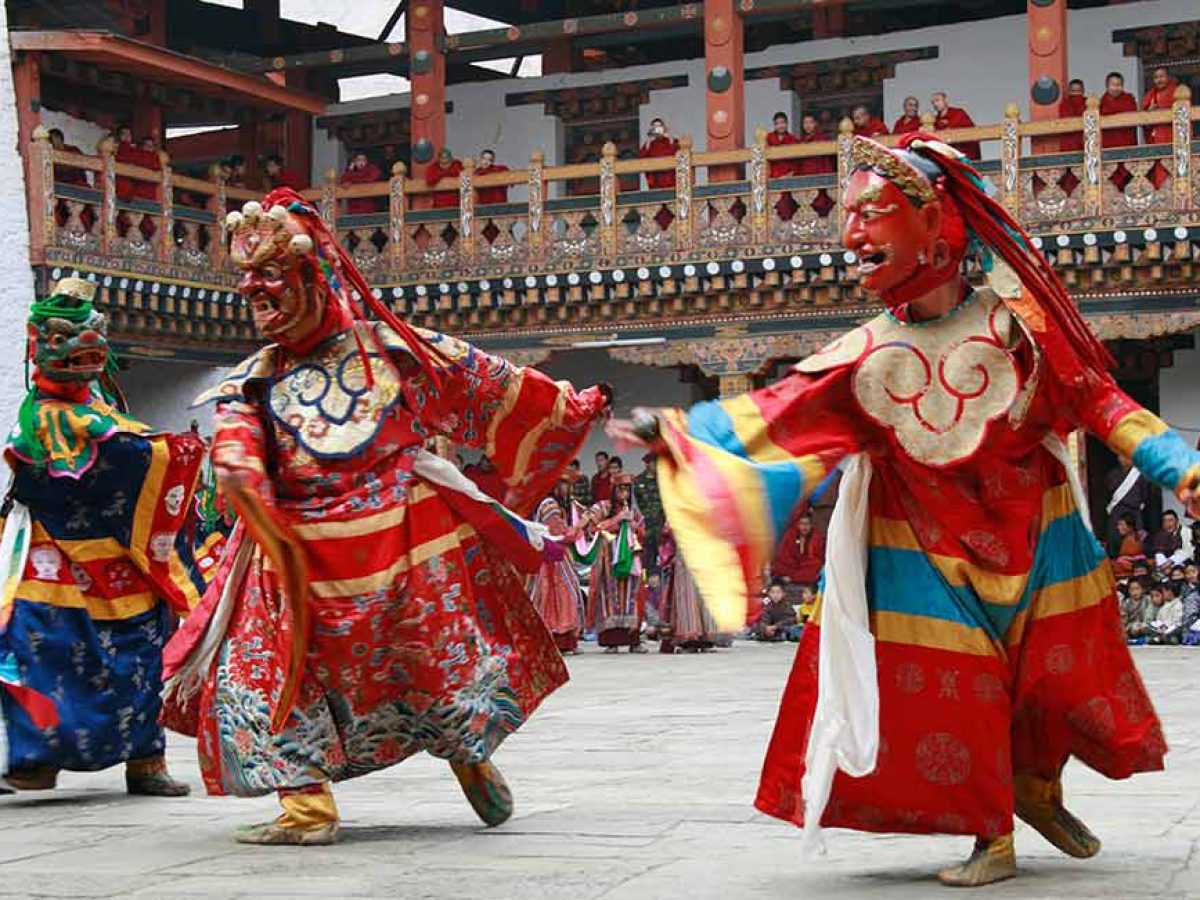
Event highlights: This festival is renowned for its Peling Chams (sacred mask dances) composed by the great saint Terton Pema Lingpa. Witness the ground-purifying Shinji Yab Yum, the rhythmic Ging Sum (Dances of the Stick, Sword, and Drum), and the UNESCO-recognized Drametse Ngacham. The event concludes with the grand unfurling of the Thongdrol, a sacred giant tapestry of Maitreya Buddha believed to grant “liberation on sight.”
Important landmarks: Explore Bhutan’s grand dzongs, sacred monasteries, and ancient temples during your Domkhar Lhakhang Festival experience.
Cultural immersion: Dive into Bhutanese heritage with mask dances, Cham dances, and local traditions at the Domkhar Tshechu program. Meet and interact with local people.
Hiking adventures: Embark on a soul-stirring hike to Tiger’s Nest, Bhutan’s iconic monastery perched dramatically on a cliffside.
Bhutanese farmhouse experience: Stay in a traditional home for an authentic rural immersion.
Day 01. Arrival at Paro – Thimphu: Sightseeing (Elevation 2320m | 50km | 1hr.)
Day 02. Thimphu: Sightseeing (Elevation 2320m)
Day 03. Thimphu – Punakha: Sightseeing (Elevation 1200m | 76km | 3hrs.)
Day 04. Punakha – Gangtey: Sightseeing (Elevation 3000m | 73km | 2hrs. 20mins.)
Day 05. Gangtey- Trongsa – Bumthang (Elevation 2800m | 154km | 4hrs. 20mins.)
Day 06. Bumthang: Sightseeing & Domkhar Tshechu Festival – 2nd Day (Elevation 2800m | 30km | 1hr.)
Day 07. Bumthang: Domkhar Tshechu Festival – Final Day (Elevation 2800m | 30km | 1hr.)
Day 08: Bumthang – Paro (Elevation 2280m | 309km | 8hrs 15mins.)
Day 09. Paro: Hike to Tiger’s Nest (Elevation 2280m)
Day 10. Paro Departure (Elevation 2280m)
Touch down in Paro! Representative from Bhutan Mystical Tours will receive you in the airport. Drive to Thimphu, the capital city of Bhutan.
On the way see Tamchog Monastery built by Thangthong Gyalpo, the iron bridge builder who came to Bhutan in 1433 looking for Iron Ore. He built 108 bridges across Tibet and Bhutan, out of which 8 were built in Bhutan.
On reaching Thimphu, drive uphill to Kuensel Phodrang where sits a massive sized Statue of Buddha Dordenma. It is made of bronze and is 169 ft. tall. You can get a spectacular view of Thimphu valley from this point.
Next, visit to National Memorial Chorten, a monument dedicated to the Third King of Bhutan, His Majesty King Jigme Dorji Wangchuck.
Later, head to Tashichho Dzong (Fortress), which houses the throne room of the king and the offices of the government.
Overnight in Thimphu
Today dive deeper into the Thimphu city by a visit to the National Zoo which where the Takins, Bhutan’s national animal is preserved.
While returning, you may visit to Dupthop Lhakhang which is known to be one of the few surviving nunneries in Bhutan.
Visit the National Library to see a vast collection of ancient texts and scriptures. The library is a treasure trove for those interested in Bhutanese history and culture.
Later visit the National institute for Zorig Choesum (13 traditional arts) the painting School is on your next list. Bhutanese tradition has been preserved through painting and sculptures. Thangkas, the sacred Buddhist religious scrolls are either painted or embroidered on high-quality fabrics.
Walk for a minute to Folk Heritage Museum which offers visitors the Bhutanese folk heritage and craftsmanship of Bhutan’s rural past.
Driving further to the city, visit National Postal Museum, which is worth a visit for you can get your own picture on Bhutanese stamp right then and there. Get a photo clicked then and there or give a photo of your dear ones and you will get personalized stamps in 5 minutes.
Explore Centenary Farmers Market if you’re there on a weekend, this bustling market is a great place to experience local life and try fresh produce.
Overnight in Thimphu
Take a scenic drive to Punakha, En route, stop at the Dochula Pass (3116m) for panoramic views of the magnificent range of the Higher Himalayas.
Visit the Royal Botanical Garden, the Royal Botanical Park, also known as the Rhododendron Garden at Lamperi, located half hour drive towards Punakha/Wangdue valleys.
On reaching Punakha, take a short hike to Chimi Lhakhang, which was built by Lama Drukpa Kuenley also known as “The Divine Madman”, in the year 1499. The Temple is also known as “the Temple of Fertility”.
Visit Punakha Dzong built in 1637 by Zhabdrung Ngawang Namgyal and is situated at the confluence of the Pho Chu (Male River) and the Mo Chu (Female River). War materials captured during the various battles with Tibetans are preserved here. Punakha served as a capital of Bhutan till the year of 1955.
In the evening, walk across the longest suspension bridge in Bhutan (160 m). The bridge is the longest of its kind and connects the two sides of the Pho chu river. You will get a great view of the river, valley, temple, and a good boost of adrenaline as well.
Overnight in Punakha
Today as you leave Punakha, the road ascends through the picturesque valleys of the Wangdue Phodrang district. You’ll encounter lush green rice fields, small settlements, and the occasional sight of local farmers tending to their crops.
On reaching, visit Gangtey Gompa founded in 1613. It is a Nyingma monastery and is affiliated to other Nyingma monasteries including Tamshing in Bumthang.
Explore the beautiful Phobjikha valley, where you will be able to see the rare, Black-Necked Crane, especially during wintertime. For more information on this magnificent bird, you can also visit the Crane Information center, under the supervision of the Royal Society for the Protection of Nature.
The farmhouse stay in Phobjikha is a wonderful way to immerse yourself in the local culture and enjoy the serene beauty of the valley. It will allow you to experience traditional Bhutanese hospitality with home-cooked meals made from fresh, local ingredients. Spend time with the family, learning about their way of life, participating in farming activities, traditional crafts, or even cooking sessions.
Overnight in Gangtey
After breakfast approach the Pele La Pass, standing at an elevation of 3,390 meters. The pass serves as a natural boundary between the western and central regions of Bhutan.
En route, visit Trongsa Dzong (fortress), the most impressive Dzong in Bhutan. The first two hereditary kings ruled Bhutan from this Dzong.
Just a minute from the fortress, visit Ta Dzong, an ancient watch tower which currently serves as a museum. Drive further to Bumthang.
Overnight in Bumthang
Morning: After a peaceful breakfast in Bumthang, we drive to the serene Chumey Valley to witness the first day of the Domkhar Tshechu festival. This festival is unique because it is held at Domkhar Tashicholing Lhakhang, a temple founded in the 16th century by the great scholar Lama Longchen Rabjam.
Unlike the larger festivals in Thimphu, Domkhar offers an intimate “hidden gem” atmosphere. You will have a front-row seat to the sacred Cham dances, including the powerful Peling Chams, sacred mask dances composed by the “Treasure Discoverer” Terton Pema Lingpa. Witness the Dance of the Eight Manifestations of Guru Rinpoche and the purificatory Black Hat Dance, performed with deep devotion by the local monks.
Afternoon: After the festival, we drive to the Choekhor Valley to explore Bhutan’s spiritual foundations:
Jakar Dzong: Known as the “Castle of the White Bird,” this 16th-century fortress offers stunning views of the valley.
Jambay Lhakhang: Visit one of Bhutan’s oldest temples, built in the 7th century by King Songtsen Gampo.
Kurjey Lhakhang: Discover the sacred complex where Guru Rinpoche left his body imprint in a cave.
Evening: Enjoy a leisurely evening strolling through Jakar town, perfect for trying local Bumthang honey or exploring traditional handicrafts.
Overnight in Bumthang
Morning: We begin early at Domkhar Monastery for the festival’s grand finale. The highlight of the final day is the unfurling of the Thongdrol (sacred giant tapestry). In Bhutanese tradition, “Thongdrol” means “liberation on sight”, it is believed that simply witnessing it cleanses one’s sins. Join the local community in receiving blessings before the tapestry is rolled back up before the first rays of the sun.
Afternoon: After the festival, we drive to the Tang Valley to visit Mebartsho (The burning lake). This is one of Bhutan’s most sacred pilgrimage sites. It was here in the 15th century that Terton Pema Lingpa famously dived into the deep waters with a burning butter lamp and emerged with hidden treasures (Terma) and the lamp still alight. The area is filled with colorful prayer flags and small clay offerings (Tsatsas) left by devotees.
Evening: We conclude our Bumthang journey with a visit to the Bumthang Brewery. You can sample the famous “Red Panda” Weissbier, a locally brewed craft beer, and learn about the Swiss-Bhutanese heritage that makes this valley so unique.
Overnight in Bumthang
Today will be the longest drive of your tour as you travel from Bumthang to Paro. The journey passes through beautiful mountain landscapes, forested valleys, and traditional villages, with opportunities to stop along the way for photography and short breaks.
Leisure & Photography: Enjoy free time in Paro town for shopping, photography, or sampling local cuisine.
Overnight in Paro
Dedicate your final day to a delightful excursion to the Tiger’s Nest, also known as the Taktsang Monastery. The hike is challenging but incredibly rewarding!
On returning to the base, a Bhutanese cuisine experience in the woods is a celebration of both food and nature. It offers a unique way to engage with Bhutan’s rich culinary traditions while surrounded by the tranquility and beauty of the natural world.
At the end of the day, we recommend you have a Traditional hot stone bath to get relaxed after a tiring day. It is not only practiced as a comforting leisure but also to treat various diseases. You can stroll down the Paro town where you can always find Bhutanese authentic handicrafts which can be good souvenirs and remembrances of this exotic and serene Himalayan Kingdom ‘Bhutan’.
Overnight in Paro
Our guide will drop you at Paro international airport as per your flight schedule. Farewell for your onwards journey.
The cost listed below includes the Sustainable Development Fee (SDF) of US $100 per person per night and the Bhutan visa fee of US $40 per person.
US $ 2,461 per person
Yes, international visitors attending the Domkhar Tshechu Festival generally pay an entrance fee of Nu. 1,000 (approximately USD 12). This fee is a direct contribution toward the maintenance of the Domkhar Lhakhang. If you are traveling on a pre-planned tour, these Bhutan festival dates 2027 fees are often already included in your package.
To experience the full spiritual impact of the Domkhar Tshechu Festival 2027, it is best to arrive at Domkhar Lhakhang by 8:30 AM or 9:00 AM. Most sacred mask dances (Chams) begin in the morning when the light is perfect for photography and the atmosphere is most serene.
Arriving early allows you to secure a good viewing spot alongside the local residents of Chumey Valley. The morning sessions often feature the most significant ritual dances, providing a deeper insight into the Bhutan festival dates 2027 and the unique traditions of the Bumthang region.
When attending the Domkhar Tshechu Festival, visitors should dress modestly and respectfully. As the event is held at the sacred Domkhar Lhakhang, ensure your shoulders and knees are covered. Since it falls in late April, the Chumey Valley weather is generally pleasant, but it can be crisp in the shade.
We recommend wearing comfortable layers and sturdy closed-toe shoes for the courtyard seating. While traditional Bhutanese dress (Gho or Kira) is not required for tourists, it is a wonderful gesture of respect that the local community deeply appreciates.
Yes, photography is allowed during the Domkhar Tshechu Festival, but there are important spiritual restrictions to follow. You may photograph the colorful mask dances and local festivities in the outdoor courtyard of Domkhar Lhakhang.
However, photography and filming are strictly prohibited inside the temple’s inner sanctums. Please avoid using flash, as it can disturb the monks and performers. Drones are strictly banned for tourists throughout Bhutan, and we recommend using handheld cameras rather than large tripods to stay mobile in the intimate, crowded village setting.
For the best experience, we recommend a 10 to 12-day itinerary. Since the Domkhar Tshechu is held in the central Bumthang region, a longer stay allows for a comfortable journey through Thimphu and Punakha before reaching the festival.
An 11-day tour is ideal, as it typically includes the 3-day festival celebration, a visit to the spiritual highlights of Bumthang, and the iconic Tiger’s Nest hike in Paro. This duration ensures you the best festival tour experience without feeling rushed by the cross-country travel.
Absolutely! Your Domkhar Tshechu Festival tour can be fully tailored to your interests. Since most tours are private, you can easily adjust your itinerary to include other Bhutan festival such as the nearby Ura Yakchoe or the Rhododendron Festival.
Many travelers choose to extend their stay to 12 days to deeply explore the spiritual sites of Bumthang, while others prefer a 10-day focused route. We can also incorporate specific activities like photography sessions or village homestays to make this festival experience truly unique.
Yes, a licensed Bhutanese tour operator like Bhutan Mystical Tours is essential for a seamless festival experience. To visit the Domkhar Tshechu Festival in the Chumey Valley, a certified guide and private vehicle are mandatory.
We handle all logistics for your Bhutan festival tours including the Sustainable Development Fee (SDF) payment, visa clearance, and route permits. Having an experienced local guide ensures you understand the deep spiritual meaning of the sacred mask dances at Domkhar Lhakhang and guarantees your journey through the mountains is safe and comfortable.
We recommend booking your Domkhar Tshechu Festival 2027 tour at least 5 to 6 months in advance. Since the festival falls in April, Bhutan’s peak spring season, flights into Paro and accommodations in the Chumey Valley fill up quickly.
Early booking is essential to secure your preferred hotels in Bumthang and to allow Bhutan Mystical Tours enough time to process your visa and route permits. Planning ahead ensures you don’t miss out on this intimate celebration and the chance to see the sacred Peling Chams.
You can exchange the following currencies at the Bank of Bhutan and Bhutan National Bank:
• US Dollar
• Euro
• British Pound
• Japanese Yen
• Swiss Franc
• Hong Kong Dollar
• Canadian Dollar
• Australian Dollar
• Singapore Dollar
• Danish Krone
• Norwegian Krone
• Swedish Krone
Our comprehensive Domkhar Tshechu Festival tour package is designed for a completely hassle-free experience. It typically includes 3-star government-certified accommodation, all daily meals (breakfast, lunch, and dinner), a licensed professional guide, and private transportation with a dedicated driver.
Additionally, the package covers your domestic route permits and entrance fees for the monuments, including the Domkhar Lhakhang. To make your trip easy, we collect the $100 daily government fee and the $40 visa fee when you book. We then pay these fees to the government for you to make sure your visa is approved before you arrive
During the Domkhar Tshechu Festival, travelers typically stay in charming 3-star government-approved resorts or boutique local guesthouses in the Chumey Valley. Most rooms feature traditional Bhutanese décor, twin-sharing beds, and modern attached bathrooms.
Staying in Chumey allows you to stay close to the festival grounds at Domkhar Lhakhang, often surrounded by serene pine forests. For those seeking extra comfort during the Bhutan festival tours, upgrades to luxury 4-star or 5-star lodges in nearby Jakar can also be arranged.
For your Domkhar Tshechu Festival tour, we provide comfortable, well-maintained vehicles specifically chosen for Bhutan’s mountain terrain. All our drivers are licensed experts familiar with the winding roads of the Chumey Valley.
For 1–2 travelers, we use premium SUVs like the Toyota Prado, Hyundai Tucson, or Santa Fe. Smaller groups of 3–8 enjoy spacious minivans like the Toyota HiAce, while larger groups travel in a Toyota Coaster bus. Each vehicle is selected to ensure safety and comfort during your journey throughout the tour.
Visa processing for the Bhutan festival tour is a straightforward digital process. As your licensed tour operator, Bhutan Mystical Tours typically handles this for you to ensure all permits for Bhutan are included.
You simply need to provide a digital copy of your passport (valid for 6 months) and a recent passport-sized photo. Once you have cleared the government-mandated fees, we apply for your visa online. You will receive a Visa Clearance Letter via email, which you must present when boarding your flight to Paro. Your official visa stamp is then issued upon arrival.
Currently, two airlines operate international flights to Bhutan: Drukair (Royal Bhutan Airlines) and Bhutan Airlines (Tashi Air). All international flights land at Paro International Airport, with direct connections to international hubs.
Additionally, domestic flights are available between Paro and several regional airports, including Bumthang (Bathpalathang), Yonphula, and Gelephu. These 30-to-40-minute flights are a great way to save time and avoid long mountain drives. For the most up-to-date schedules and routes, Click here.
The Sustainable Development Fee (SDF) is a mandatory daily tax for all visitors to Bhutan. It directly funds the country’s free healthcare, education, and environmental conservation. As of 2026, the standard rate for international travelers is USD 100 per night.
Children aged 6 to 12 receive a 50% discount (USD 50 per night), while those 5 and under are exempt. For Indian nationals, the SDF is INR 1,200 per night. This fee is separate from your tour costs and must be paid in full to secure your visa or travel permit.
The standard and most secure way to pay for your tour is through an international wire transfer (SWIFT) in US Dollars. This is the official payment method used by the Bhutanese tourism industry to ensure your funds are handled safely.
Once you confirm your trip, Bhutan Mystical Tours will provide you with our official bank details at the Bhutan National Bank. You simply take these details to your local bank to process the transfer. It usually takes 3 to 5 business days for the payment to reach us, after which we can immediately finalize your visa and permits.
Yes, there are several ways to save on your Bhutan tour. While the USD 100 daily government fee (SDF) is fixed for adults, we offer discounts on our service packages based on group size and traveler category.
Group Discounts: Groups of 11 to 15 people receive a 50% discount on the tour package for one person. Groups of 16 or more receive a 100% discount for one person (SDF excluded).
Children: Children under 6 stay for free (no SDF). Children aged 6 to 12 receive a 50% discount on the daily SDF.
Students: Full-time students under 25 with a valid ID receive a 25% discount on the tour package.
Indian Nationals: Pay a concessional SDF of INR 1,200 per night.
