The Jambay Lhakhang Festival 2026, also known as Jambay Lhakhang Drup, is one of Bhutan’s most significant and timeless festivals. It’s held annually at the 7th-century Jambay Lhakhang in Bumthang which is one of 108 temples said to have been built in a single day by Tibetan King Songtsen Gampo. During the festival, visitors witness the unique “Ter Cham” mask dance and the famous midnight fire ritual, popularly known as the Naked Dance. It’s an extraordinary showcase of Bhutanese tradition, spirituality, and cultural heritage.
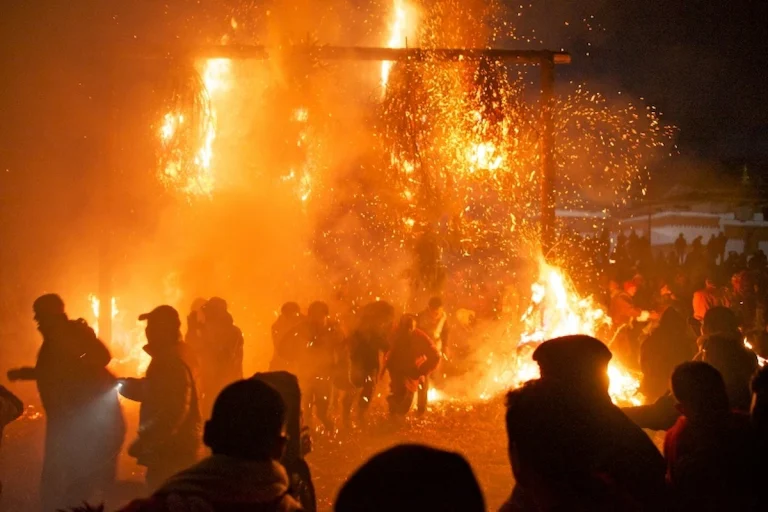
The Jambay Lhakhang Drup Festival is one of Bhutan’s top autumn attractions, offering ideal weather, peak travel season, and a perfect blend of culture and spirituality. During Jambay Lhakhang Drup 2026, travelers experience centuries-old ritual dances, the thrilling Mewang fire ceremony, and the rare midnight Ter Cham. It’s an exceptional chance to witness authentic Bhutanese traditions and enjoy the country at its most beautiful and lively.
Main Highlights: Mewang (Fire Blessing Ceremony) and Tercham (Sacred Naked Dance)
Popular Mask Dances: Guru Tshengye Cham, Ging Tsholing, Durdag Cham, Zhana Cham, and other sacred Cham performances
Important Landmarks: Explore grand dzongs, sacred monasteries, and ancient temples along with your Jambay Lhakhang Drup Festival tour.
Museums & Cultural Insights: Discover Bhutan’s heritage through museums and cultural centers, enriching your festival experience.
Cultural Immersion: Witness mask dances and the famous Midnight Naked Dance during Jambay Lhakhang Drup, a true dive into Bhutanese tradition.
Hiking Adventures: Trek scenic trails in Paro, Gangtey & Bumthang Valley, exploring monasteries and festival surroundings.
Bhutanese Farmhouse Stay: Experience rural life while staying in a traditional farmhouse during your Jambay Lhakhang Festival 2026 trip.
Day 01. Arrival at Paro – Thimphu (Elevation 2320m | 50km | 1hr.)
Day 02. Thimphu: Sightseeing (Elevation 2320m)
Day 03. Thimphu – Punakha: Sightseeing (Elevation 1200m | 76km | 3hrs.)
Day 04. Punakha – Gangtey: Sightseeing (Elevation 3000m | 73km | 2hrs. 20mins.)
Day 05. Gangtey- Trongsa – Bumthang (Elevation 2800m | 154km | 4hrs. 20mins.)
Day 06. Bumthang: Jambay Lhakhang Drup Festival (Elevation 2800m)
Day 07. Bumthang: Jambay Lhakhang Drup Festival (Elevation 2800m)
Day 08: Bumthang – Paro (Elevation 2280m | 309km | 8hr & 10mins.)
Day 09. Paro: Hike to Tiger’s Nest (Elevation 2280m)
Day 10. Paro Departure (Elevation 2280m)
Touch down in Paro! Representative from Bhutan Mystical Tours will receive you in the airport. Drive to Thimphu, the capital city of Bhutan.
On the way see Tamchog Monastery built by Thangthong Gyalpo, the iron bridge builder who came to Bhutan in 1433 looking for Iron Ore. He built 108 bridges across Tibet and Bhutan, out of which 8 were built in Bhutan.
On reaching Thimphu, drive uphill to Kuensel Phodrang where sits a massive sized Statue of Buddha Dordenma. It is made of bronze and is 169 ft. tall. You can get a spectacular view of Thimphu valley from this point.
Next, visit to National Memorial Chorten, a monument dedicated to the Third King of Bhutan, His Majesty King Jigme Dorji Wangchuck.
Later, head to Tashichho Dzong (Fortress), which houses the throne room of the king and the offices of the government.
Overnight in Thimphu
Today dive deeper into the Thimphu city by a visit to the National Zoo which where the Takins, Bhutan’s national animal is preserved.
While returning, you may visit to Dupthop Lhakhang which is known to be one of the few surviving nunneries in Bhutan.
Visit the National Library to see a vast collection of ancient texts and scriptures. The library is a treasure trove for those interested in Bhutanese history and culture.
Later visit the National institute for Zorig Choesum (13 traditional arts) the painting School is on your next list. Bhutanese tradition has been preserved through painting and sculptures. Thangkas, the sacred Buddhist religious scrolls are either painted or embroidered on high-quality fabrics.
Walk for a minute to Folk Heritage Museum which offers visitors the Bhutanese folk heritage and craftsmanship of Bhutan’s rural past.
Driving further to the city, visit National Postal Museum, which is worth a visit for you can get your own picture on Bhutanese stamp right then and there. Get a photo clicked then and there or give a photo of your dear ones and you will get personalized stamps in 5 minutes.
Explore Centenary Farmers Market if you’re there on a weekend, this bustling market is a great place to experience local life and try fresh produce.
Overnight in Thimphu
Take a scenic drive to Punakha, En route, stop at the Dochula Pass (3116m) for panoramic views of the magnificent range of the Higher Himalayas.
Visit the Royal Botanical Garden, the Royal Botanical Park, also known as the Rhododendron Garden at Lamperi, located half hour drive towards Punakha/Wangdue valleys.
On reaching Punakha, take a short hike to Chimi Lhakhang, which was built by Lama Drukpa Kuenley also known as “The Divine Madman”, in the year 1499. The Temple is also known as “the Temple of Fertility”.
Visit Punakha Dzong built in 1637 by Zhabdrung Ngawang Namgyal and is situated at the confluence of the Pho Chu (Male River) and the Mo Chu (Female River). War materials captured during the various battles with Tibetans are preserved here. Punakha served as a capital of Bhutan till the year of 1955.
In the evening, walk across the longest suspension bridge in Bhutan (160 m). The bridge is the longest of its kind and connects the two sides of the Pho chu river. You will get a great view of the river, valley, temple, and a good boost of adrenaline as well.
Overnight in Punakha
Today as you leave Punakha, the road ascends through the picturesque valleys of the Wangdue Phodrang district. You’ll encounter lush green rice fields, small settlements, and the occasional sight of local farmers tending to their crops.
On reaching, visit Gangtey Gompa founded in 1613. It is a Nyingma monastery and is affiliated to other Nyingma monasteries including Tamshing in Bumthang.
Explore the beautiful Phobjikha valley, where you will be able to see the rare, Black-Necked Crane, especially during wintertime. The Phobjikha Valley is a sanctuary for endangered black-necked cranes (WWF).
For more information on this magnificent bird, you can also visit the Crane Information center, under the supervision of the Royal Society for the Protection of Nature.
The farmhouse stay in Phobjikha is a wonderful way to immerse yourself in the local culture and enjoy the serene beauty of the valley. It will allow you to experience traditional Bhutanese hospitality with home-cooked meals made from fresh, local ingredients. Spend time with the family, learning about their way of life, participating in farming activities, traditional crafts, or even cooking sessions.
Overnight in Gangtey
After breakfast approach the Pele La Pass, standing at an elevation of 3,390 meters. This pass is often shrouded in clouds, offering a mystical atmosphere. Here, you can spot the colorful prayer flags fluttering in the wind, a symbol of Bhutanese spirituality. The pass serves as a natural boundary between the western and central regions of Bhutan.
En route, visit Trongsa Dzong (fortress), the most impressive Dzong in Bhutan. The first two hereditary kings ruled Bhutan from this Dzong.
Just a minute from the fortress, visit Ta Dzong, an ancient watch tower which currently serves as a museum. Drive further to Bumthang.
Overnight in Bumthang
Start your day with the visit to Jakar Dzong, or “Castle of the White Bird”. Explore its serene courtyards, beautiful murals, and impressive architecture while soaking in breathtaking views of the surrounding valleys.
Spend time at the Kurjey Lhakhang (monastery), a sacred site that houses the body imprint of Guru Rinpoche, who is credited with bringing Buddhism to Bhutan. The complex includes three temples, with the oldest dating back to 1652.
Today marks your immersive entry into the historic Jambay Lhakhang Drup Festival. After exploring the spiritual landmarks of Bumthang Valley, you will head to the ancient 7th-century temple courtyard in the evening for the spectacular opening of the festival.
You will stand alongside local pilgrims to witness the grand fire blessing rituals, starting with the Jinsi (sacred ground purification ceremony). The night builds to an unforgettable climax during the legendary Mewang Fire Blessing Ceremony, where a massive structure of twigs and dry leaves is set ablaze. Dancers and locals sprint beneath the flaming torches, a powerful ritual believed to cleanse negative karma, remove life obstacles, and bring immense prosperity.
Overnight in Bumthang
Spend the day fully immersed in the peak of Jambay Lhakhang Drup 2026. The daytime festival features powerful, traditional masked “Cham” dances performed by monks in brilliant silk robes. You will see spectacular performances like the Durdag Cham (Dance of the Lords of the Cremation Grounds) and the UNESCO-recognized Dramitse Ngacham (Drum Dance).
For those looking to taste something unique, the Bumthang Brewery is a must-visit. Known for its locally brewed craft beers, including the popular Bhutanese wheat beer, visitors can enjoy a tour of the brewery and sample a variety of brews while learning about the brewing process and the ingredients used.
Later tonight, you will return to the temple under the cover of darkness for the festival’s most exclusive and deeply mystical highlight: the Ter Cham, widely known as the Midnight Naked Dance. At midnight, sixteen chosen men wearing sacred masks and no clothing emerge into the moonlit courtyard to perform a powerful 8th-century cleansing dance. This raw spiritual ritual is designed to subdue evil forces and grant fertility blessings to the attendees.
Overnight in Bumthang
Dedicate your final day to a delightful excursion to the Tiger’s Nest, locally known as Taktsang Monastery. Reaching Takshang Monastery is as much an adventure as the destination itself.
On returning to the base, a Bhutanese cuisine experience in the woods is a celebration of both food and nature. It offers a unique way to engage with Bhutan’s rich culinary traditions while
surrounded by the tranquility and beauty of the natural world.
At the end of the day, we recommend you have a Traditional hot stone bath to get relaxed after a tiring day. It is not only practiced as a comforting leisure but also to treat various diseases.
You can stroll down the Paro town where you can always find Bhutanese authentic handicrafts which can be good souvenirs and remembrances of this exotic and serene Himalayan Kingdom ‘Bhutan’.
Overnight in Paro
Our guide will drop you at Paro international airport as per your flight schedule. Farewell for your onwards journey.
Your Jambay Lhakhang Drup Festival Tour cost includes the Sustainable Development Fee (SDF) of US $100 per person per night and the Bhutan visa fee of US $40 per person.
Most of our guests stay just a short hop from the temple itself, the places like Jakar Village Lodge and a few other properties nearby put you within a 5-minute drive or a 10–15 minute walk of Jambay Lhakhang. No traffic to fight, no parking to worry about, as you can genuinely just stroll over when it’s time.
The festival really unfolds in three distinct waves, and each one pulls a different crowd:
- The daytime mask dances kick off around 9:00 AM, so getting there by 8:00 AM gives you a solid spot to watch from.
- As evening sets in, the Mewang fire blessing ceremony begins around 7:00 PM, this is when things start filling up fast, so aim to be there by 6:00–6:30 PM.
- The night builds toward its peak with the Tercham, the sacred midnight dance, which runs from exactly 12:00 AM to around 2:00 AM. This is the busiest moment of the entire festival, so arrive by 10:30–11:00 PM if you want to actually see it rather than watch the back of someone’s head.
“Wear warm clothes, and leave the camera behind for Tercham. It’s a sacred moment, and you’ll want to actually be there for it, not filming it. Get yourself some sturdy but comfortable shoes too. The crowd gets close, and people don’t always watch where they’re stepping.”
-> Ngawang Yeshay, Cultural Guide, Bhutan Mystical Tours & Adventures
No, photography is strictly prohibited during the Midnight Naked Dance (Ter Cham) to respect the sacred nature of the ritual. Visitors are asked to observe silence, dress modestly (shoulders and knees covered), and experience the ceremony without cameras).
The midnight timing aligns with Buddhist astrological calculations, believed to amplify the ritual’s power. Darkness symbolizes human ignorance, while the fire represents wisdom burning through it.
Yes, but parents should note:
The Ter Cham involves semi-nudity and intense chanting (may startle young kids).
Midnight ceremonies can disrupt sleep schedules.
Unlike mask dances celebrating Guru Rinpoche, this festival focuses on:
Ancient pre-Buddhist rituals (Ter Cham).
Fire blessings for fertility/purification.
Local Bumthang traditions (less touristy than Paro or Thimphu festivals).
Modest attire is required: Covered shoulders/knees (for both genders).
Warm layers: Bumthang’s late October temperatures drop to 5°C at night.
Comfortable shoes: Festival involves standing on uneven ground for hours.
Traditional option: Rent a gho (men) or kira (women) locally for full cultural immersion.
No separate festival permit is required. Entry is covered under Bhutan’s standard tourism requirements, the Sustainable Development Fee (SDF) of US$100 per person per night and the Bhutan visa fee of US$40, both already included in your Jambay Lhakhang Drup Festival Tour package.
Bhutan requires all tourists (except nationals of India, Bangladesh, and the Maldives) to travel through a licensed Bhutanese tour operator with a pre-arranged itinerary. Independent, unguided travel isn’t permitted, so booking a Jambay Lhakhang Festival Tour with a licensed operator is a requirement, not just a convenience.
Yes. This tour pairs the festival with Bhutan’s classic highlights; Thimphu, Punakha, Gangtey, and the Tiger’s Nest hike in Paro, making it an excellent introduction to the country for first-timers, while also delivering one of Bhutan’s most authentic cultural experiences at Jambay Lhakhang.
Currently, only 2 airlines operate international flights to Bhutan: Drukair (Royal Bhutan Airlines) and Bhutan Airlines. All flights arrive at Paro International Airport, Bhutan’s only international airport. For more information about routes and schedules, Click here
