The Thimphu Tshechu Festival 2026 returns to Tashichho Dzong this September, when drumbeats and the low hum of horns fill the Wang Chhu valley for three days of masked dances and prayer. Most travelers have never heard of it, but for Bhutanese families, it’s the biggest homecoming of the year. Held annually at Tashichho Dzong, the Thimphu Tshechu Festival is a vibrant tapestry of faith where ancient mask dances invoke blessings for all who witness them. At Bhutan Mystical Tours, we believe the true magic of this event lies in the dawn rituals and the hidden ‘Drubchen‘ that precedes the main public celebrations. Our guide to the Thimphu Tshechu Festival 2026 helps you navigate the capital’s largest celebration with local insight, seamlessly combining the festivities with sightseeing in Punakha, Gangtey, and Paro for a complete Bhutanese journey.
Location: Tendrel Thang (open courtyard in front of Tashichho Dzong)
Dates: 21st – 23rd September 2026
Duration: 3 days
Best days to attend: All three days (Main event on final day)
Festival type: Religious & cultural Buddhist festival
Planning a trip for the Thimphu Tshechu Festival 2026 requires attention to specific seasonal regulations. To ensure a seamless journey, keep these essential logistics in mind:
Sustainable Development Fee (SDF): As of 2026, the mandatory SDF for international tourists is US $100 per person, per night. This fee is a direct contribution to Bhutan’s social welfare and conservation efforts.
Visa & Permits: All visitors (except those from India, Bangladesh, and Maldives) require a visa, which costs US $40. At Bhutan Mystical, we process this for you as part of your festival package.
The ‘Drubchen’ Advantage: The Thimphu Drubchen begins on September 17, 2026 – four days before the main Tshechu. This sacred event, held within the inner halls of Tashichho Dzong, features intense tantric rituals and masked dances performed by monks, believed to protect the Kingdom from harm. Unlike the main festival which draws large international crowds, the Drubchen has an intimate, deeply spiritual atmosphere that most tourists miss entirely. Guests on our extended 9-day itinerary arrive in time to witness the opening days of this sacred Drubchen before continuing on to explore Punakha and Gangtey, returning to Thimphu in time for the main Tshechu celebrations – a rare glimpse most tourists miss entirely.
- Getting to Tashichho Dzong: We usually put our guests up in southern Thimphu, close to our own office, places like Hotel 7 Suites and Hotel Tara Phendeling. From there, it’s about a 10–15 minute drive north to Tashichho Dzong. Traffic does pick up near the Dzong on festival days, as you’d expect with half the city heading the same direction, but our guides know to take the old highway instead, which stays quiet so you’ll roll in relaxed, well before the morning dances start.
- Booking Timeline: Due to high demand for the 2026 autumn season, we recommend finalizing your flight and hotel bookings at least 5–6 months in advance.
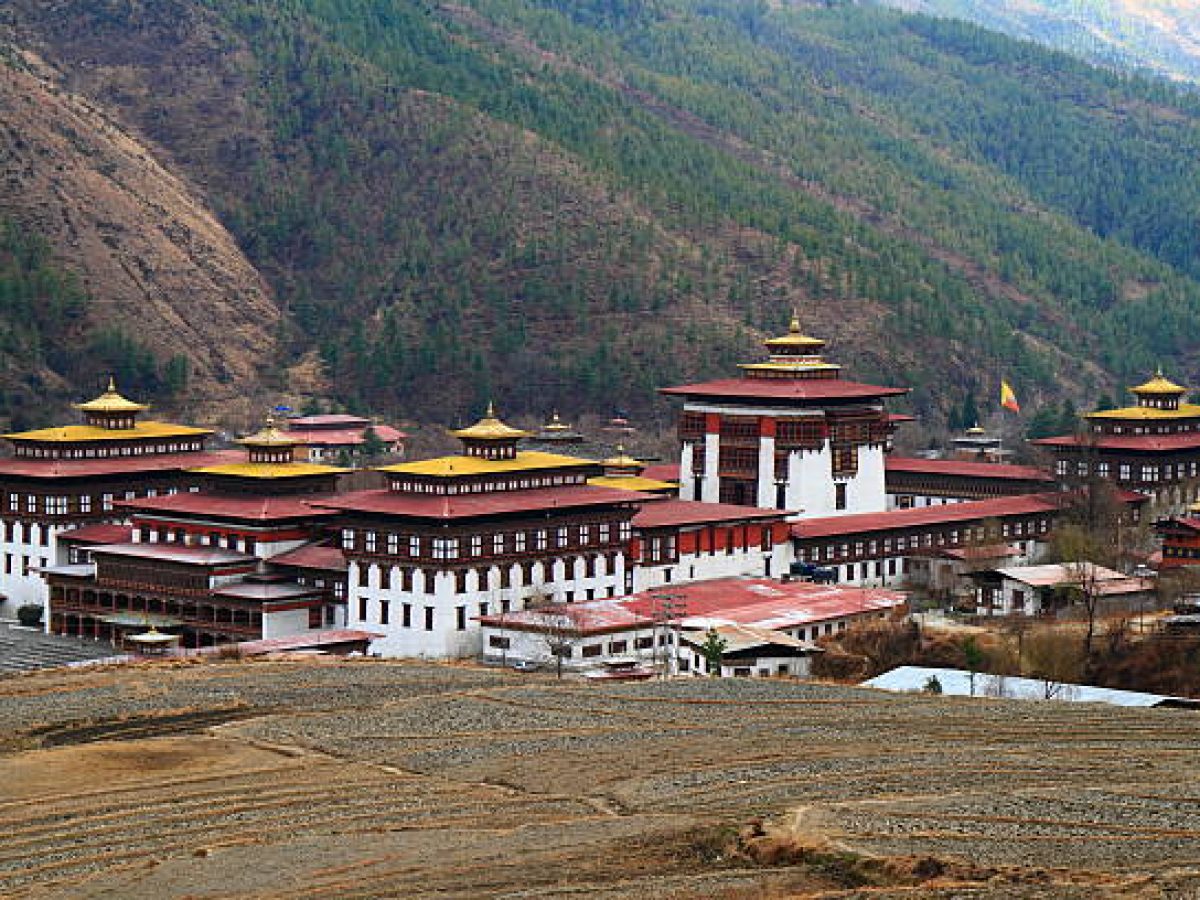
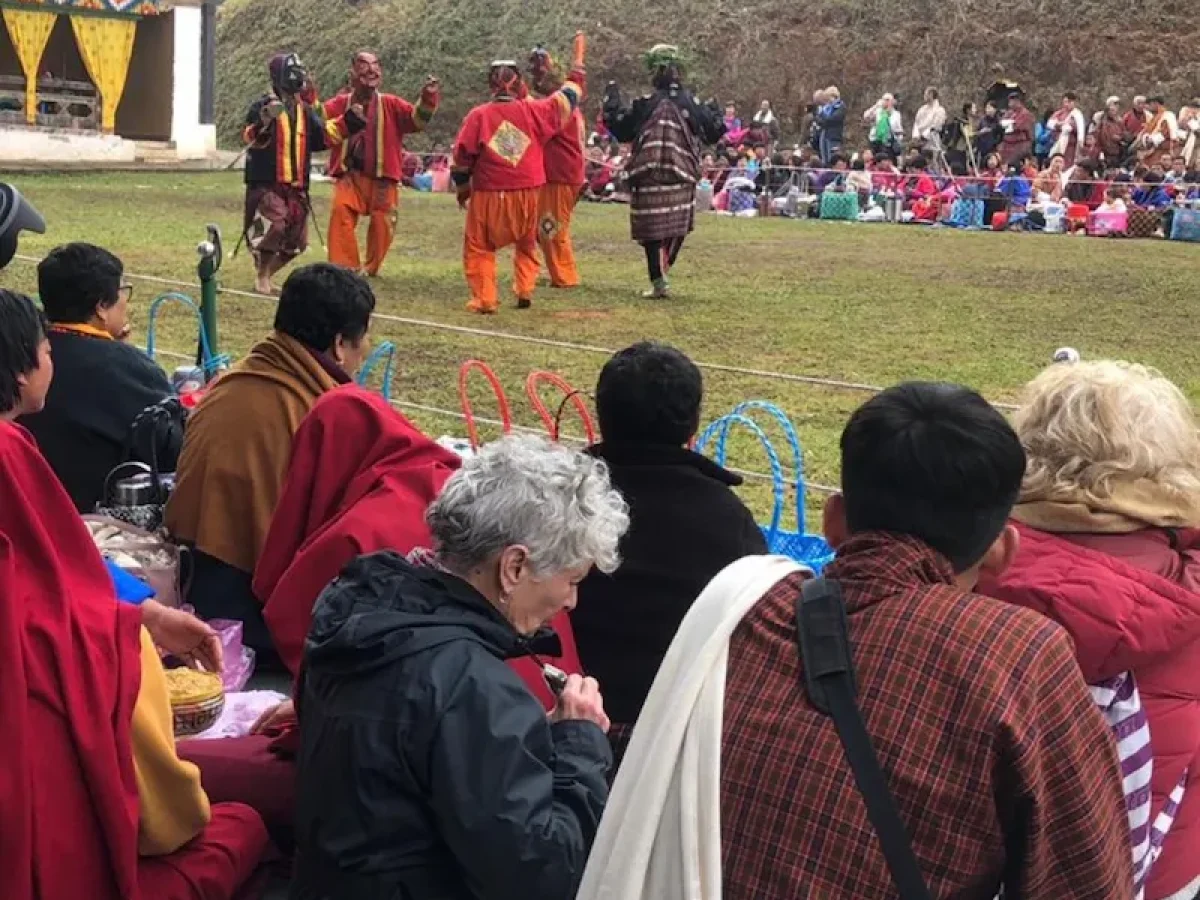
Thimphu Tshechu is the largest and most important tshechu in Bhutan, celebrated in the country’s capital and attended by thousands of locals from across the region. As a national holiday in Thimphu, the festival brings together monks, officials, families, and visitors for three days of sacred mask dances performed for spiritual merit and blessings.
Held during Bhutan’s pleasant autumn season, the Thimphu Tshechu festival 2026 also offers favorable weather for sightseeing around Thimphu. Beyond the religious performances, the city comes alive with traditional dress, local food stalls, and cultural gatherings, giving visitors a deeper insight into Bhutanese life than smaller regional festivals.
The Thimphu Tshechu has its roots in the 17th century, formally established in 1670 by Gyalse Tenzin Rabgye, the fourth Desi (secular ruler) of Bhutan. The festival honours Guru Rinpoche – known as Padmasambhava – the revered 8th-century tantric master who introduced Vajrayana Buddhism to Bhutan. According to tradition, Guru Rinpoche performed sacred dances to subdue malevolent spirits and protect the land; the Cham masked dances performed today are a living re-enactment of those divine acts.
The word “Tshechu” literally means “tenth day” in Dzongkha, referring to the tenth day of the eighth month of the Bhutanese lunar calendar – believed to be the birth anniversary of Guru Rinpoche. Tashichho Dzong itself, where the festival is hosted, has origins dating to 1216 AD, rebuilt and expanded in the 17th century under Zhabdrung Ngawang Namgyal, the unifier of Bhutan.
Over 350 years later, the Thimphu Tshechu Festival remains one of the most important national celebrations in the Kingdom; a living tradition passed down through generations of monks, dancers, and devotees.
Sacred Mask Dances (Cham): The Thimphu Tshechu Festival features a rich sequence of sacred masked dances (Cham), including Ging Sum Cham (Dance of the Three Kinds of Ging), Sha Cham (Dance of the Four Stags), Shanag Cham (Dance of the Four Black Hats), Zhana Cham (Dance of the Noblemen and Ladies), Durdag Cham (Dance of the Lords of the Cremation Grounds), Pacham (Dance of the Four Heroes), Drametse Ngacham (Dance of the Judgment), and Ging and Tsholing Cham.
Dramatic and Theatrical Dances: Includes Shawo Shachi (Dance of the Stag and the Hounds), Raksha Mangcham (Dance of the Rakshas and the Judgement of the Dead), and Pholeg Moleg (Dance of the Noblemen and the Ladies).
Folk and Other Dances: Include the UNESCO-listed Dramitse Nga Cham (Drum Dance), the joyful Dranyeo Cham (Guitar Dance) celebrating Bhutan’s unification, and Pacham (Dance of the Heroes), which guides devotees toward Guru Rinpoche.
Thongdrel Unveiling: The spiritual centrepiece of the Thimphu Tshechu Festival 2026 is the pre-dawn unveiling of the Thongdrel – a massive sacred thangka of Guru Rinpoche large enough to cover the entire front wall of Tashichho Dzong. Revealed in darkness before sunrise and rolled away before direct sunlight falls upon it, the Thongdrel is believed to cleanse negative karma and bestow a lifetime of spiritual merit upon all who witness it. Thousands of Bhutanese gather silently in the dark courtyard as lamplight slowly illuminates the sacred image – an experience that many visitors describe as the most moving moment of their entire Bhutan journey.
Local Immersion: Join locals in wearing traditional khadhar ceremonial scarves, savor festival sweets and traditional dishes, and receive blessings from resident monks.
Prime Photography Opportunities: Capture the golden-hour glow across dzong courtyards and sacred performances, perfect for memorable photos and cultural storytelling.
Day 01: Arrival at Paro -Thimphu | Elevation 2320m | 55km | 1 hr.|
Day 02: Thimphu: Sightseeing | Elevation 2320m |
Day 03: Thimphu – Punakha |Elevation 1200m | 76km | 3hrs.|
Day 04: Punakha – Gangtey | Elevation 3000m | 73km | 2hrs. 20mins. |
Day 05: Gangtey – Thimphu: Thimphu Tshechu Festival | Elevation 2320m | 124km | 3hrs. 30mins. |
Day 06: Thimphu Tshechu Festival | Elevation 2320m |
Day 07: Thimphu Tshechu Festival – Paro | Elevation 2280m |
Day 08: Paro Hiking | Elevation 2280m |
Day 09: Paro Departure | Elevation 2280m |
Touch down at Paro. A representative from Bhutan Mystical Tours will welcome you at the airport and transfer you to Thimphu.
On the way, stop at Tamchog Monastery, built by Thangthong Gyalpo in 1433. Notably, he constructed 108 iron bridges across Tibet and Bhutan, with 8 in Bhutan alone.
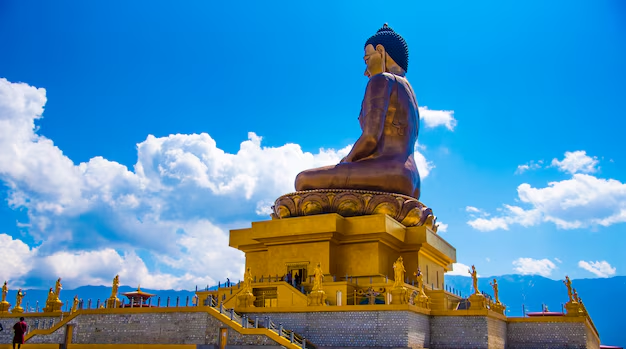
Once in Thimphu, head to Kuensel Phodrang, home to the massive Buddha Dordenma statue. From here, enjoy panoramic views of the entire capital city.
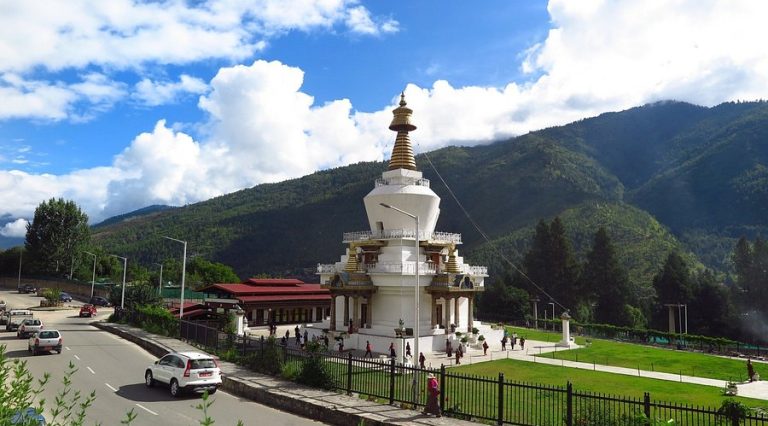
Next, visit the National Memorial Chorten, built in honor of Bhutan’s Third King.
Spend the evening strolling around the local market in Thimphu town.
Overnight in Thimphu
Start with the National Zoo, home to the Takin, Bhutan’s national animal.
After that, visit Dupthop Lhakhang, one of Bhutan’s few remaining nunneries.
Then, head to the National Library to explore ancient texts and sacred scriptures.
As a next step, visit the Institute for Zorig Choesum, Bhutan’s painting school preserving traditional arts. There, observe thangka paintings and sculptures being created by skilled students.
Just nearby, the Folk Heritage Museum reveals insights into Bhutanese rural life and craftsmanship.
Next, explore the National Postal Museum, where you can print stamps with your own photo.
If you’re visiting on a weekend, stroll through the Centenary Farmers Market to experience local life and produce.
Overnight in Thimphu
After breakfast, take a scenic drive from Thimphu to Punakha.
On the way, stop at the majestic Dochula Pass (3116m) for panoramic views of the Himalayan ranges.
Soon after, visit the Royal Botanical Park at Lamperi. It offers a refreshing walk and showcases Bhutan’s stunning alpine flora.
Upon reaching Punakha, enjoy a short hike to Chimi Lhakhang, also called the Temple of Fertility. It was built in 1499 by Lama Drukpa Kuenley, also known as the “Divine Madman.”
Later, visit the iconic Punakha Dzong, built in 1637 at the confluence of the Pho Chu and Mo Chu rivers. This dzong served as Bhutan’s capital until 1955 and played a key role in national governance.
In the evening, walk across the longest suspension bridge in Bhutan (160 m). The bridge is the longest of its kind and connects the two sides of the Pho chu river. You will get a great view of the river, valley, temple and a good boost of adrenaline as well.
Overnight in Punakha
After breakfast, begin your journey toward Gangtey, passing through the lush valleys of Wangdue Phodrang.
Upon arrival, visit the ancient Gangtey Gompa, founded in 1613. This Nyingma monastery is affiliated with other major monasteries, including Tamshing in Bumthang.
Later, explore the serene Phobjikha Valley, home to the endangered, Black-Necked Crane during winter. For a closer look, stop at the Crane Information Centre, operated by the Royal Society for the Protection of Nature.
A farmhouse stay in Gangtey offers a chance to immerse yourself in authentic rural Bhutanese life. Enjoy home-cooked meals and engage in daily activities like cooking, farming, or crafts with the host family.
Overnight in Gangtey
Drive to Thimphu and attend Thimphu Tshechu Festival 2026. We head directly to the Tendrel Thang (festival ground) outside Tashichho Dzong.
Witness the Shawo Shachi (Dance of the Stag and the Hounds): This is more than a dance; it is a theatrical play. It depicts the 11th-century story of the hunter Gonpo Dorji, who was converted to Buddhism by the saint Milarepa.
The Atsara (Clowns): Look for the masked clowns with red wooden noses.
In the evening, visit the serene Changangkha Lhakhang, perched on a ridge above central Thimphu. This 12th-century monastery is a spiritual sanctuary for locals and offers sweeping views of the city.
Overnight in Thimphu
In the morning, return to Tashichho Dzong to witness more performances of the festival.
A full day dedicated to the most powerful and visually stunning Cham dances.
The Durdag Cham (Dance of the Lords of the Cremation Grounds): Watch four dancers in skull masks and white costumes. They represent the protectors of the charnel grounds.
The Tungam Cham (Dance of the Terrifying Deities): Dancers wear deep red robes and carry ritual daggers (Phurba).
Your final day of Thimphu Tshechu festival 2026 culminates:
Unveiling of the Guru Rinpoche Thongdrel: This giant silk applique thangka is over three stories high. It is unfurled down the wall of the Dzong before the first rays of sun hit the valley.
The Guru Tshengye (Eight Manifestations of Guru Rinpoche): After the sun rises, witness the full procession of the Guru’s eight forms, each with a unique mask and meaning.
Pro-Tip: The Guru Tshengye (Eight Manifestations of Guru Rinpoche) is the most sought-after dance. We advise our guests to arrive at the Dzong by 6:30 AM to secure a seat among the local families.
Overnight in Paro
Thimphu Tshechu Festival tour is not complete without Tiger’s Nest. Today’s guided hike reveals why this cliffside monastery is Bhutan’s crown jewel. Reaching this iconic site is both a spiritual journey and a physical adventure.
After visiting the monastery, descend slowly and enjoy a traditional Bhutanese lunch in the nearby woods.
In the afternoon, unwind with a traditional hot stone bath, a Bhutanese wellness ritual with healing benefits.
Next, visit Kichu Lhakhang, the 7th century monastery and the Ta Dzong (National Museum)
Later, explore the markets of Paro Town, where you’ll find handicrafts and souvenirs to take home.
Overnight in Paro
After your breakfast, your guide will escort you to the Paro International Airport.
The package cost for Thimphu Tshechu festival 2026 package includes the Sustainable Development Fee (SDF) of USD $100 per person, per night, as well as the Bhutan visa fee of USD $40 per person.
US$ 2,200 per person
The best time to watch the main dances and take photos is in the morning, from 7:00 AM to 11:00 AM, when the weather is cooler and the light is ideal.
No, you do not need tickets to attend Thimphu Tshechu festival 2026.
While photography is welcome in the courtyard, please note that photography is strictly forbidden inside the inner sanctums of the Lhakhangs (temples) and during certain high-level blessings. Your guide will alert you to these sacred moments.
The main masked dances and public festivities generally begin around 8:00–9:00 AM. For the best viewing spots, it’s recommended to arrive by 7:30–8:00 AM.
Standing near the edges provides clearer views and easier movement during busy hours. Arrive early to get a good spot in the Tashichho Dzong courtyard.
Wear modest clothing that covers your shoulders and knees, and choose comfortable shoes. Remember to stay respectful during performances and avoid blocking views or entering sacred areas.
For an ideal experience, 3–5 days cover the festival itself, 6 days is standard to include Paro and Punakha highlights, and 7–9 days allow for a deeper cultural immersion.
We recommend the booking at least 5 to 6 months in advance as flights and accommodations fills up fast. However, last-minute bookings can still be arranged by Bhutan Mystical Tours, subject to availability. We’ll do our best to make it happen!
Thimphu Tshechu stands out for its large scale, location in the capital, and role as a major social and cultural gathering, attracting thousands of locals and tourists to Tashichho Dzong.
The usual packages include accommodations in 3-star hotels, daily meals, transport between destinations, sightseeing, and an expert local guide to ensure a smooth and enriching festival experience.
Bhutan is served by Druk Air and Bhutan Airlines, both of which operate flights connecting Paro International Airport with major cities in Asia. For more information, visit:
Drukair
Drukair Official Website
Bhutan Airlines
Bhutan Airlines Official Website
For festival tours, Bhutan visas are handled by licensed tour operators like Bhutan Mystical Tours after booking. You need a confirmed tour, full payment (including the $40 visa fee and $100/night Sustainable Development Fee), and a passport copy. Visas are usually processed within 4–6 working days.
Our Thimphu Tshechu Festival 2026 package starts from US$ 2,200 per person for an 8-night/9-day tour. This includes the Sustainable Development Fee (USD $100/night), Bhutan visa fee (USD $40), all meals, accommodation, transport, sightseeing, and a licensed English-speaking guide. Contact us for customised group packages or alternative itinerary lengths.
Independent travel in Bhutan is only possible for visitors from India, Bangladesh, and the Maldives. All other international visitors are required to book through a licensed Bhutanese tour operator, which handles your visa, Sustainable Development Fee, and itinerary, so a Thimphu Tshechu Festival tour package is the standard way to attend.
No separate permit is required to attend the Thimphu Tshechu Festival 2026 itself. As a licensed Bhutan tour operator, Bhutan Mystical Tours handles your visa and all necessary travel permits as part of your booking, entry to Tashichho Dzong for the Tshechu is included.
Yes. As Bhutan’s largest and most accessible tshechu, held in the capital with strong tourist infrastructure, Thimphu Tshechu Festival is one of the most welcoming festivals for first-time visitors, offering an easy introduction to Bhutanese culture alongside sightseeing in Paro, Punakha, and Gangtey.
