Experience the thrill of rafting tours in Bhutan while discovering the stunning beauty of the Himalayas. Paddle through the exciting Pho Chhu Rapids in Punakha, where adventure meets breathtaking scenery.
Bhutan is home to several major rivers including Wang Chhu, Puna Tsang Chhu, Mo Chhu, Mangde Chhu, Kuri Chhu, and Dangme Chhu. These rivers offer something for everyone, from gentle waters perfect for beginners to challenging rapids for experienced rafters. With expert guides leading the way, rafting tours in Bhutan are safe, immersive, and eco-friendly. Every journey allows you to connect with the kingdom’s pristine landscapes and rich cultural heritage while enjoying an unforgettable adventure.
Experience the thrill of rafting on the Pho Chhu and Mo Chhu rivers in Punakha, some of Bhutan’s clearest and most untamed rivers. Navigate a variety of rapids, from calm stretches to adrenaline-pumping challenges, all while surrounded by the stunning Himalayan landscapes.
Bhutan’s rivers and surrounding landscapes are home to diverse wildlife, making every rafting adventure in Punakha a chance to connect with nature. Birdwatchers may spot rare species like the white-bellied heron, while the serene surroundings provide opportunities to observe other wildlife.
Rafting on the Pho Chhu and Mo Chhu rivers in Punakha offers a dynamic experience that changes with the seasons. In winter, the rivers flow gently, providing a calm and reflective paddle. During the monsoon, the rapids grow stronger, creating an exhilarating challenge for experienced rafters
The tour takes you close to iconic landmarks and remote monasteries tucked into the mountains, offering a glimpse into the kingdom’s spiritual traditions and history. This combination of adventure and culture makes the rafting journey truly unique.
A key highlight of rafting tours in Punakha is the expert guidance provided by us. Skilled guides ensure your safety on the Pho Chhu and Mo Chhu rivers while enriching the journey with local knowledge. They share fascinating insights into Bhutan’s geography, wildlife, and culture, making your adventure both safe and deeply memorable.
Day 01. Arrival in Paro – Thimphu | Elevation 2280m | 50km | 1hr |
Day 02. Thimphu sightseeing | Elevation 2320m |
Day 03. Thimphu – Punakha | Elevation 1274m | 73km | 2hrs |
Day 04. Punakha Rafting | Elevation 1274m |
Day 05. Punakha – Paro | Elevation 2280m | 115km | 3hrs |
Day 06. Hike to Tiger’s Nest Monastery | Elevation 2280m |
Day 07. Paro – Departure
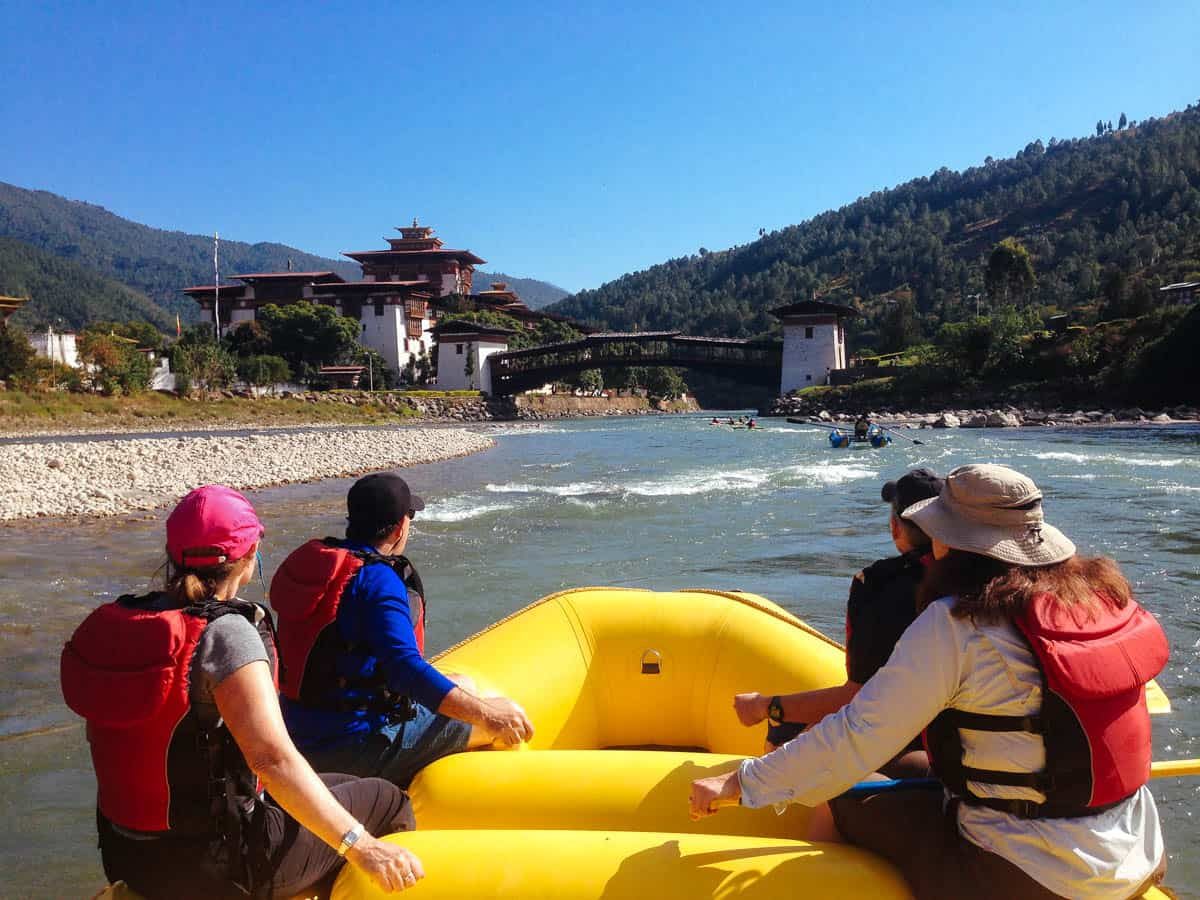
Bhutan offers thrilling rafting on the Pho Chhu and Mo Chhu rivers in Punakha, with spring and autumn being the best times to visit.
Spring (March to May) – Moderate water levels and lush green landscapes make rafting safe and scenic.
Autumn (September to November) – Stable rivers, crisp weather, and golden landscapes create ideal conditions for all rafters.
You will be received by our representative from Bhutan Mystical Tour at the airport and drive Thimphu city.
On the way to Thimphu stop to see Tamchog Monastery, built by Thangthong Gyalpo also known as Lama Chazampa, meaning the Iron Bridge Builder in the 1500.A.D. He built 108 bridges across Tibet and Bhutan, out of which 8 were built in Bhutan.
On reaching Thimphu, drive uphill to Buddha Dordenma Statue. It is made of bronze and measures 169 ft. in height. You can get a spectacular view of Thimphu valley from this point.
Next, visit to National Memorial Chorten, a monument dedicated to the Third King of Bhutan, His Majesty King Jigme Dorji Wangchuck.
Later, head to Tashichho Dzong (Fortress), which houses the throne room of the king and the offices of the government.
Overnight in Thimphu
Today the day begins with visit to the National Zoo which where the Takins, Bhutan’s national animal is preserved.
While returning, you may visit to Dupthop Lhakhang which is known to be one of the few surviving nunneries in Bhutan.
Visit the National Library to see a vast collection of ancient texts and scriptures. The library is a treasure trove for those interested in Bhutanese history and culture.
A visit to the National institute of Zorig Choesum (13 traditional arts) the painting School is on your next list. Bhutanese tradition has been preserved through painting and sculptures.
Walk for a minute to Folk Heritage Museum which offers visitors the Bhutanese folk heritage and craftsmanship of Bhutan’s rural past.
Driving further to the city, visit National Postal Museum, which is worth a visit for you can get your own picture on Bhutanese stamp right then and there.
Shopping at Centenary Farmers Market if you’re there on a weekend, this bustling market is a great place to experience local life and shop for handicrafts, fresh produce and souvenirs.
Overnight in Thimphu
Drive to Punakha. Stop at Dochula pass to view the magnificent range of the Higher Himalayas.
On the way, visit the Royal Botanical Garden, also known as the Rhododendron Garden at Lamperi.
On reaching Punakha, visit Chimi Lhakhang, which was built by Lama Drukpa Kuenley also known as “The Divine Madman”, in the year 1499. The Temple is also known as the “Temple of Fertility”.
Visit Punakha Dzong built in 1637 by Zhabdrung Ngawang Namgyal and is situated at the confluence of the Pho Chu (Male River) and the Mo Chu (Female River). Punakha served as a capital of Bhutan till the year of 1955.
Overnight in Punakha
Begin your adventure with a transfer from your hotel to the put-in point near Samdingkha. Your expert guide will provide a safety briefing and equip you with helmets, life vests, and paddles. Set off on the Pho Chhu River, navigating Class II–III rapids like “Pipeline” and “Wrathful Buddha,” while enjoying the breathtaking Himalayan scenery.
Pass by the iconic Punakha Dzong and continue to the confluence of Pho Chhu and Mo Chhu, where the rivers merge to form the Puna Tsang Chhu, offering stunning views and perfect photo opportunities.
Conclude your rafting adventure at the take-out point near Khuruthang, followed by a transfer back to your hotel.
Guided by experienced professionals, the tour is ideal for beginners and intermediate rafters, with small groups for a personal, immersive experience.
Overnight in Punakha
Start your day early with a scenic drive from Punakha to Paro, a journey that takes approximately around 3 hours.
On reaching Paro, visit Rinpung Dzong, which is an impressive fortress-monastery, known for its fine Bhutanese architecture and stunning views over the Paro valley. It houses administrative offices and a monastic community and is an important cultural site in Bhutan. Explore the intricate artwork, courtyards and temples within the Dzong.
Situated above Paro Dzong, the National Museum offers fascinating exhibits on Bhutan’s culture, history, and natural environment. From traditional art to Bhutanese artifacts and ancient weaponry, the museum provides a comprehensive look at the country’s rich heritage.
After a day of sightseeing, take a leisurely stroll around Paro town, soaking in the peaceful atmosphere. Enjoy dinner at one of the local restaurants, where you can savor Bhutanese specialties.
Overnight in Paro
Today you have a delightful excursion to the tiger’s nest, locally known as Taktsang Monastery. Reaching this Monastery is as much an adventure as the destination itself.
After the exhilarating hike, drive to Kichu Lhakhang, one of Bhutan’s oldest and most revered temples, dating back to the 7th century. It is said to be built by the Tibetan king Songtsen Gampo to subdue a demon that lay across the land.
Next, head to Drukgyal Dzong, a ruined fortress that once guarded the Paro Valley against invasions from Tibet. The dzong offers a glimpse into Bhutan’s history and strategic defense. From here, you can enjoy stunning views of Mount Jomolhari in the distance.
At the end of the day, we recommend you have a Traditional hot stone bath to get relaxed after a tiring day. It is not only practiced as a comforting leisure but also to treat various diseases.
You can stroll down the Paro town where you can always find Bhutanese authentic handicrafts which can be good souvenirs and remembrances of this exotic and serene Himalayan Kingdom.
Overnight in Paro
Our guide will drop you at Paro international airport as per your flight schedule. Farewell for your onwards journey.
The cost listed below includes the Sustainable Development Fee (SDF) of US $100 per person per night and the Bhutan visa fee of US $40 per person. Please note that entrance fees for museums, monuments and festival visits are not included and must be paid directly at the respective sites.
Pricing:
US $ 1720 per person
Cost per raft: US $ 150
Embarking on a rafting tour in Bhutan offers an exciting way to explore its stunning rivers. Whether navigating wild rapids or calm stretches, being well-prepared with the right gear ensures a safe and enjoyable experience. Here’s a guide on essential equipment to help make your kayaking or rafting adventure successful and memorable.
Safety should always be your top priority. A personal flotation device (PFD) or life jacket, is a must-have for any kayaking or rafting tour. While most tour operators will provide these, it’s important to ensure the PFD fits properly and is in good condition.
In Bhutan, rivers can range from calm to fast-flowing, with occasional rapids and obstacles like rocks and branches. A helmet is an essential piece of gear to protect your head from impact in the event of a flip or collision. Most rafting and kayaking tours will provide helmets, but if you’re bringing your own, make sure it’s lightweight, comfortable and provides adequate coverage.
Keeping your valuables and clothing dry while on the water is crucial. A high-quality dry bag or waterproof pouch will protect your electronics, clothing, snacks, and other personal items from water exposure. Dry bags come in various sizes, so select one that fits your needs.
Weather conditions in Bhutan can change rapidly, particularly in the mountains, so it’s important to dress in layers and wear clothing suited for water activities. Consider wearing moisture-wicking clothing that dries quickly, as well as a base layer that will keep you warm even when wet.
If you’re rafting, your guide will typically provide you with a suitable paddle.
The sun in Bhutan can be intense, especially when you’re on the water for extended periods. To avoid sunburn and skin damage, pack essential sun protection items: Sunscreen, Hat or Cap, Sunglasses & Lip balm with SPF.
Your choice of footwear is critical for both comfort and safety. It is essential to have water shoes that are designed to provide protection while allowing for good grip on slippery surfaces, such as river rocks and wet shores.
Tip: Avoid regular shoes that absorb water and become heavy. Consider water sandals or shoes with drainage holes to ensure comfort and safety.
Having a basic first aid kit is essential, even though guides usually carry one.
Include essentials like bandages, antiseptic wipes, gauze, pain relief medication, blister care, insect repellent, and personal medications.
Bhutan’s rivers offer stunning backdrops and scenery, so you’ll want to capture your adventure. A waterproof camera or GoPro is perfect for kayaking and rafting tours. Ensure your camera or phone is in a waterproof case or bag to prevent water damage.
You will need plenty of energy for paddling, so pack lightweight, non-perishable snacks such as trail mix, energy bars, and dried fruits. It’s also important to stay hydrated, so bring a refillable water bottle.
You will enjoy rafting in Punakha on the Pho Chhu and Mo Chhu rivers, famous for scenic beauty and thrilling rapids.
The rivers feature Class II–III rapids, perfect for beginners and intermediate rafters on this Bhutan rafting tour.
No experience is needed. This rafting tour in Bhutan is designed for beginners and intermediate adventurers, with expert guidance and safety briefings.
Yes, all tourists are required to book their trip through a local tour operator to visit Bhutan, except for citizens of India, Bangladesh and the Maldives. This is a mandatory step to obtain a visa. The tour operator must be certified by the Tourism Council of Bhutan (TCB). Bhutan Mystical is a trusted, TCB-certified tour operator in the country.
The visa fee for Bhutan is USD 40 per person per trip. This fee is applicable to all nationalities, except for citizens of India, who do not require a visa to visit Bhutan.
Bhutan Mystical will book and ticket your flights to and from Paro with Drukair (Royal Bhutan Airlines) or Bhutan Airlines. As your tour operator, we will manage all aspects of your Paro flights, including notifying you of any changes to flight schedules. Since flight timings can change at short notice, we will keep you informed. For more information visit
Drukair
Drukair Official Website
Bhutan Airlines
Bhutan Airlines Official Website
Yes. Experienced rafting guides in Bhutan ensure safety, provide instructions and check all rafting equipment before your adventure.
You can exchange the following currencies at the Bank of Bhutan and Bhutan National Bank
• US Dollar
• Euro
• British Pound
• Japanese Yen
• Swiss Franc
• Hong Kong Dollar
• Canadian Dollar
• Australian Dollar
• Singapore Dollar
• Danish Krone
• Norwegian Krone
• Swedish Krone
Yes, most standard tourist-class hotels now offer Wi-Fi and as of now, the internet speed and reliability have improved significantly. All luxury resorts and lodges also provide wireless internet access. However, in more remote areas, the internet and power supply can be intermittent, so some inconsistency in connectivity may occur.
The ideal seasons for rafting in Bhutan are spring (March to May) and autumn (September to November) for safe water levels and scenic landscapes.
