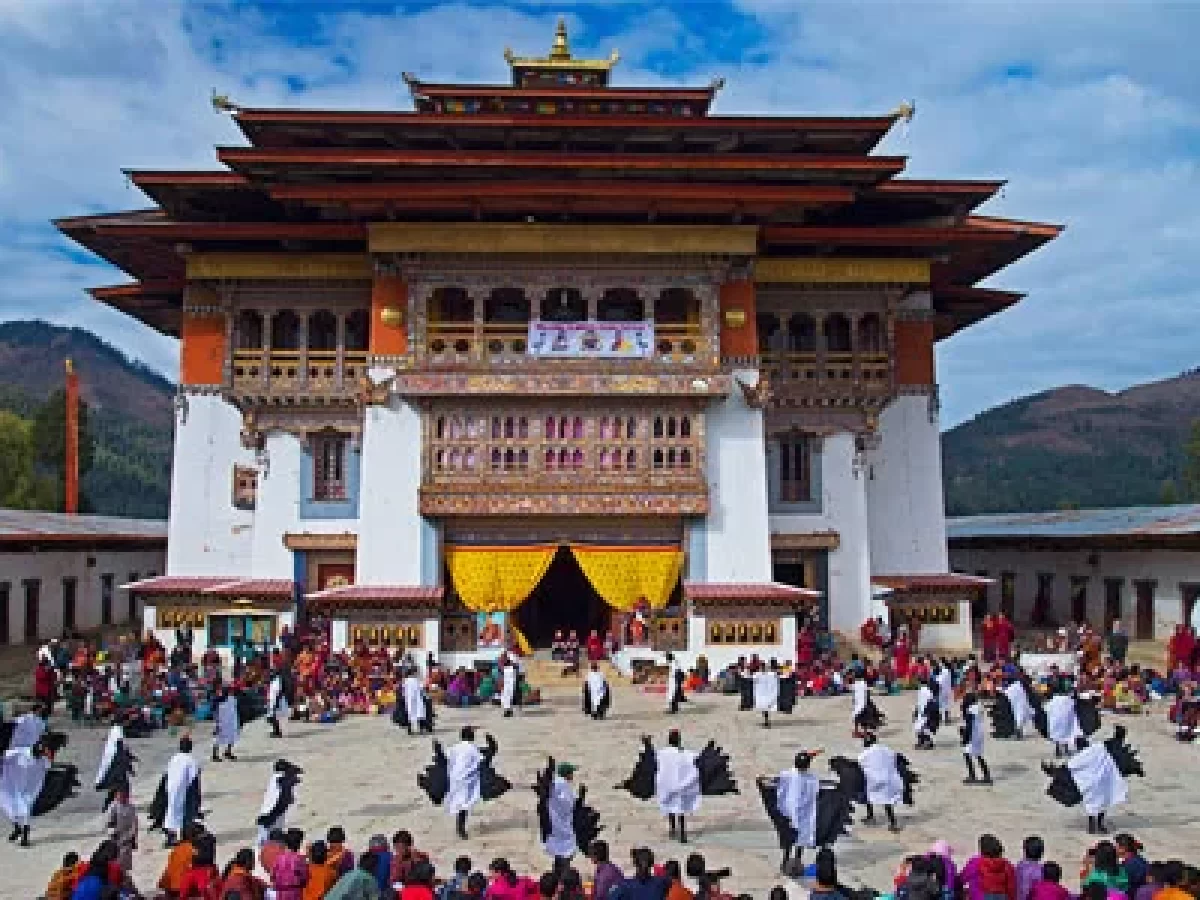
The Black Necked Crane Festival in Bhutan is celebrated every November at the courtyard of the majestic Gangtey Gompa monastery in Phobjikha Valley. This year in 2026, the travellers can witness the arrival of these revered cranes while you can enjoy an immersive cultural experience with traditional mask dances, folk songs, and community celebrations. Many visitors combine the Black Necked Crane Festival tour with visits to the iconic landmarks such as Punakha Dzong, National Memorial Chorten, and the towering Statue of Buddha Dordenma, creating a memorable journey that blends nature, culture and spirituality.
Location: Gangtey Monastery, Phobjikha Valley
Dates: 11th November 2026
Duration: 1 day (festival)
Best time to attend: Morning of 11th November for performances and rituals
Festival type: Cultural and wildlife celebration
Beyond its cultural charm, the Black-Necked Crane Festival plays a vital role in wildlife conservation and community support. This event raises awareness about the protection of endangered black-necked cranes and their fragile winter habitat in Phobjikha Valley. At the same time, it provides economic opportunities for local communities through tourism, making the festival not just a celebration, but a meaningful effort to preserve Bhutan’s natural and cultural heritage.
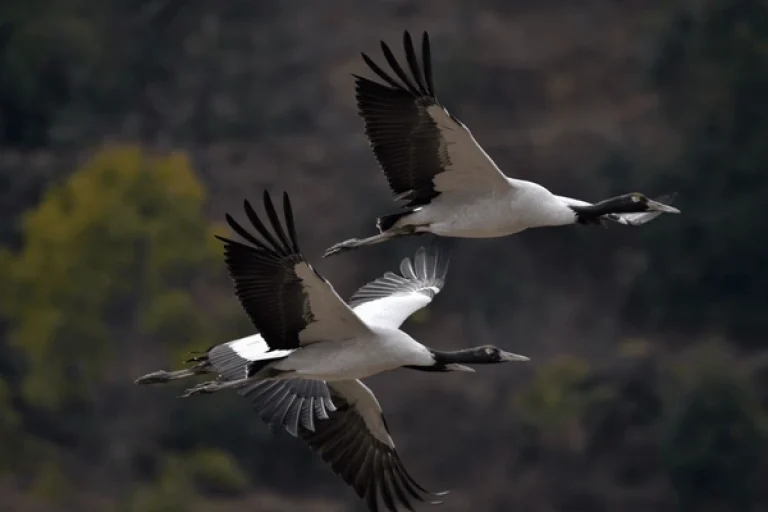
The Black Necked Crane Festival is one of Bhutan’s most celebrated cultural and wildlife events, held every November in the scenic Phobjikha Valley. This period offers pleasant weather and ideal travel conditions, coinciding with Bhutan’s active festival season, making it the perfect time to experience local traditions. You can witness the arrival of endangered black-necked cranes and enjoy community rituals, gaining a rare and authentic glimpse into Bhutanese culture.
The Crane Dance
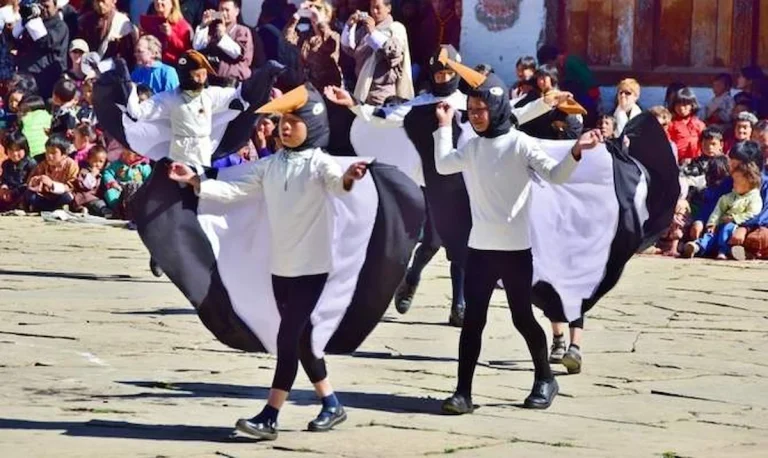
Local schoolchildren perform a dance that mimics the cranes’ movements, a tradition the community has kept alive for decades. Monks and villagers join in with masked Cham dances and short dramas about conservation, so you’re watching both a sacred ritual and a community celebration at once.
The Cranes Themselves
Phobjikha Valley is one of the few wintering grounds for the endangered black necked crane, and the festival timing means you have a real chance to see them foraging in the wetlands just beyond the monastery, especially early in the morning.
Phobjikha Valley
Wide open marshland ringed by forested hills, quiet and largely undeveloped, it’s one of the most striking landscapes in Bhutan and very different from the mountain passes and river valleys you’ll pass through earlier in the trip.
A Night in a Local Farmhouse
Spend an evening with a Phobjikha family, share a home cooked meal, and if you choose, try a Dotsho hot stone bath, a Bhutanese tradition using river stones heated over fire.
Day 01: Arrival at Paro -Thimphu (Elevation 2320m | 50km | 1hr.)
Day 02: Thimphu: Sightseeing (Elevation 2320m)
Day 03: Thimphu – Punakha (Elevation 1200m | 72km | 2hrs.)
Day 04: Punakha – Gangtay (Elevation 3000m | 73km | 2hrs. 20mins.)
Day 05: Gangtey: Black Necked Crane Festival
Day 06: Gangtay – Paro: Sightseeing (Elevation 2280m | 172km | 4hrs. 40mins.)
Day 07: Paro: Hike to Tiger’s Nest (Elevation 2280m)
Day 08: Paro Departure
Along the way, stop at Tamchog Monastery, built by Thangthong Gyalpo, the legendary “iron bridge builder” who arrived in Bhutan in 1433 in search of iron ore. He went on to build 108 bridges across Tibet and Bhutan, eight of which still stand in Bhutan today.
On reaching Thimphu, head uphill to Kuensel Phodrang, home to the massive bronze Statue of Buddha Dordenma, standing 169 feet tall, with sweeping views over the city below.
Visit the National Memorial Chorten, built in memory of Bhutan’s Third King, His Majesty Jigme Dorji Wangchuck.
Head to Tashichho Dzong, the fortress that houses the king’s throne room and the seat of Bhutan’s government.
Overnight in Thimphu
Spend the day exploring more of Thimphu, starting with the National Zoo, home to the Takin, Bhutan’s national animal.
On the way back, stop at Dupthop Lhakhang, one of the few surviving nunneries in Bhutan.
Visit the National Library, home to a vast collection of ancient Bhutanese texts and scriptures, a treasure trove for anyone interested in the country’s history and culture.
Next, head to the National Institute for Zorig Chusum, Bhutan’s painting school, where the country’s 13 traditional arts are kept alive, including the painting and embroidery of Thangkas, sacred Buddhist scrolls.
Walk for a minute to Folk Heritage Museum which offers visitors the Bhutanese folk heritage and craftsmanship of Bhutan’s rural past.
Driving further to the city, visit National Postal Museum, which is worth a visit for you can get your own picture on Bhutanese stamp right then and there. Get a photo clicked then and there or give a photo of your dear ones and you will get personalized stamps in 5 minutes.
Explore Centenary Farmers Market if you’re there on a weekend, this bustling market is a great place to experience local life and try fresh produce.
Overnight in Thimphu
Take a scenic drive to Punakha, En route, stop at theDochula Pass (3116m) for panoramic views of the magnificent range of the Higher Himalayas.
Visit the Royal Botanical Garden, the Royal Botanical Park, also known as the Rhododendron Garden at Lamperi, located half hour drive towards Punakha/Wangdue valleys.
On reaching Punakha, take a short hike to Chimi Lhakhang, which was built by Lama Drukpa Kuenley also known as “The Divine Madman”, in the year 1499. The Temple is also known as “the Temple of Fertility”.
Explore Punakha Dzong built in 1637 by Zhabdrung Ngawang Namgyal and is situated at the confluence of the Pho Chu (Male River) and the Mo Chu (Female River). War materials captured during the various battles with Tibetans are preserved here. Punakha served as a capital of Bhutan till the year of 1955.
In the evening, walk across the longest suspension bridge in Bhutan (160 m). The bridge is the longest of its kind and connects the two sides of the Pho chu river. You will get a great view of the river, valley, temple, and a good boost of adrenaline as well.
Overnight in Punakha
In the morning, a short excursion to Khamsung Yulley Namgyal Choling Monastery. This hike offers not just a spiritual retreat but also an exhilarating hiking experience. The trail is approximately 30-45 minutes, winding through serene rice fields and pine forests. As you ascend, the picturesque views of the Punakha valley unfold, providing ample photo opportunities. Hike is moderate, making it suitable for families and casual trekkers.
Transfer to Gangtey.
On reaching, visit Gangtey Gompa founded in 1613. It is a Nyingma monastery and is affiliated to other Nyingma monasteries including Tamshing in Bumthang.
Explore the beautiful Phobjikha valley where you will be able to see the rare, Black-Necked Crane, especially during wintertime.
For more information on this magnificent bird, you can also visit the Crane Information center, under the supervision of the Royal Society for the Protection of Nature.
Overnight in Gangtey
In the morning, arrive at the Gangtey Goenpa courtyard to join local families celebrating the return of the “Heavenly Birds.” The highlight is the Black-Necked Crane Dance, where local schoolchildren perform graceful, choreographed movements mimicking the birds’ arrival. You’ll witness a unique blend of sacred mask dances and environmental dramas that showcase the valley’s deep conservation roots.
For lunch, visit the community stalls to sample local specialties like buckwheat pancakes (Kuley) and Ema Datshi made with sun-dried Phobjikha chilies. Pair your meal with Suja (butter tea), the traditional way to stay warm in the crisp November air.
In the afternoon, embark on a gentle 1.5-hour hike along the Gangtey Nature Trail. This is the best time to observe the cranes foraging in the wetlands. We will also visit the Black-Necked Crane Information Center to view the birds through high-powered telescopes and learn about the migration from the Tibetan Plateau.
Drive to Paro.
The day starts with a visit to Rimpung Dzong (fortress) also known as “Heap of Jewel” built in the year of 1646 as the Centre of administrative and religious authority in this valley.
Visit Ta Dzong built in 1656 and renovated in 1968, an ancient watchtower, which now has been converted as the National Museum.
Later, a visit to the Drukgyel Dzong which was built by Zhabdrung Ngawang Namgyel in 1644 to commemorate the victory over the Tibetan invaders.
In the evening, free to stroll in the town for leisure and photography.
Overnight in Paro
Dedicate your final day to a delightful excursion to the Tiger’s Nest, locally known as Taktsang Monastery. Reaching Takshang Monastery is as much an adventure as the destination itself.
On returning to the base, a Bhutanese cuisine experience in the woods is a celebration of both food and nature. It offers a unique way to engage with Bhutan’s rich culinary traditions while
surrounded by the tranquility and beauty of the natural world.
At the end of the day, we recommend you have a Traditional hot stone bath to get relaxed after a tiring day. It is not only practiced as a comforting leisure but also to treat various diseases.
You can stroll down the Paro town where you can always find Bhutanese authentic handicrafts which can be good souvenirs and remembrances of this exotic and serene Himalayan Kingdom ‘Bhutan’.
Overnight in Paro
Our guide will drop you at Paro international airport as per your flight schedule. Farewell for your onwards journey.
The cost listed below includes the Bhutan’s Sustainable Development Fee (SDF) policy of US $100 per person per night and the Bhutan visa fee of US $40 per person.
Solo Traveler: US$2,350 per person
2–3 Travelers: US$1,860 per person
4+ Travelers: US$1,720 per person
Yes, and it depends on where you’re from. International visitors pay Nu. 500 per person, regional/Indian visitors pay Nu. 250, and locals get in free. The fee goes toward running the festival and supporting crane conservation work in the valley.
Get to Gangtey Monastery between 8:00 and 9:30 AM. Local villagers show up early to claim good spots in the courtyard, so arriving before the performances start means better views and better photos.
Dress warmly and modestly. Since the festival is held at the monastery, cover your shoulders and knees, long pants or an ankle-length skirt work well. Phobjikha sits at around 3,000 meters, so mornings are cold: bring a jacket, scarf, and gloves. Hats come off once you’re inside the courtyard.
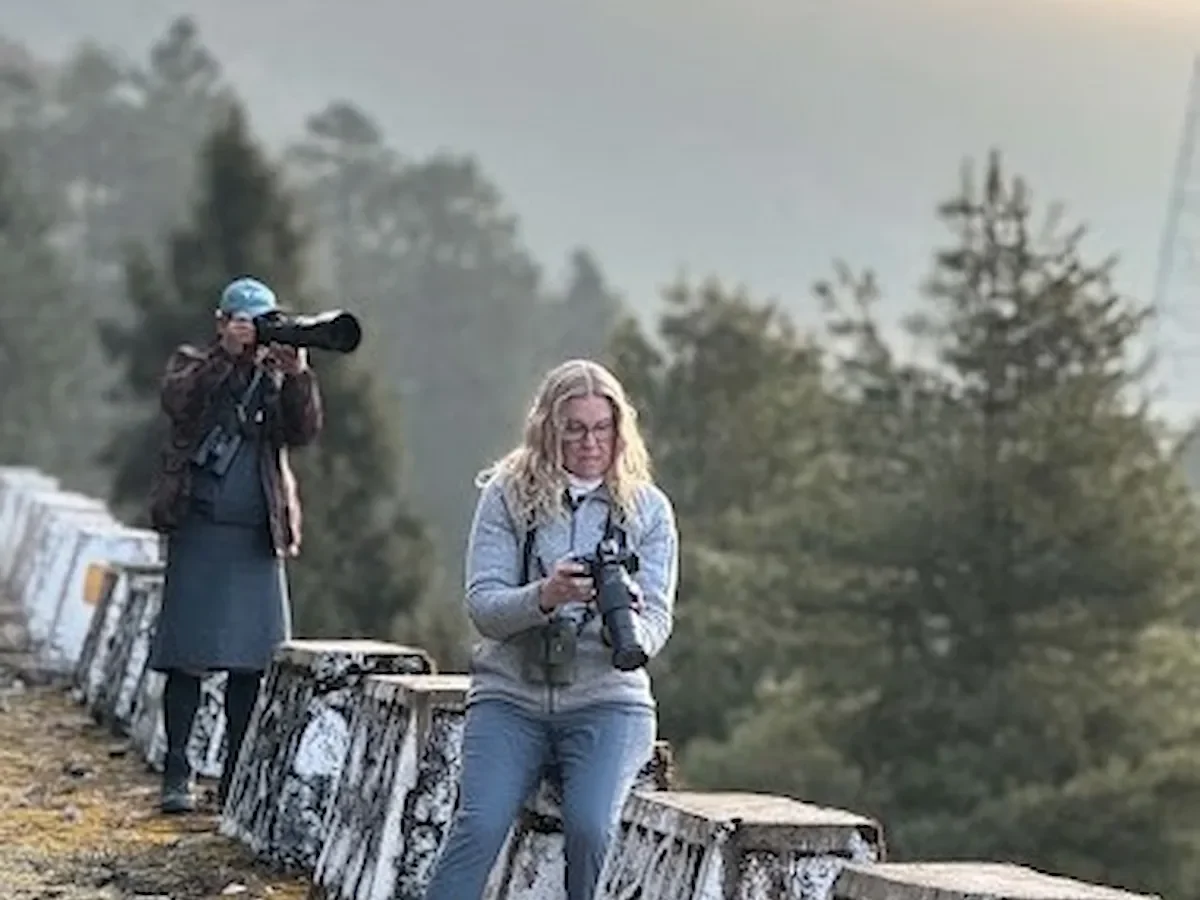
Yes, in the outdoor courtyard during the performances. A few things to keep in mind: no photography inside temple halls, no drones, avoid flash so you don’t distract the performers, and keep large tripods at home, the courtyard gets crowded. Please don’t approach the cranes themselves or step onto the dance ground for a shot.
Most travelers go with 8 days, which covers the festival plus Bhutan’s main highlights, Thimphu, Punakha, Phobjikha, and the hike to Tiger’s Nest in Paro. If you’d rather go deeper into central Bhutan, a 10 to 12 day version adds Trongsa and Bumthang.
Yes. Bhutan tours are private and guided by design, so the itinerary is easy to adjust. You can extend it to 10 to 12 days for Trongsa and Bumthang, or trim it to 4 to 6 days focused on the festival and western Bhutan’s highlights.
Yes, almost all international travelers do. Phobjikha Valley sits outside Paro and Thimphu, and getting there, plus visiting sites like Gangtey Goenpa, requires a certified local guide. A licensed operator like ours handles the guide, driver, permits, visa, transport, and accommodation.
4 to 6 months, ideally. The festival falls during Bhutan’s busy autumn season, and Phobjikha has a limited number of lodges, they, along with flights into Paro, fill up early. Booking ahead also gives your operator time to lock in guides, vehicles, and permits.
Airport transfers, accommodation, all meals, a licensed guide, private transport, sightseeing fees, and the required travel permits.
Mostly comfortable 3 star government approved hotels, guesthouses, or traditional farmhouses, usually twin sharing with attached bathrooms. 4 or 5 star options can be arranged on request.
It depends on group size. SUVs like the Toyota Prado or Hyundai Santa Fe for 1 to 2 travelers, minivans like the Toyota HiAce or Hyundai H1 for 3 to 8, and a Toyota Coaster bus for larger groups. All drivers are experienced with Bhutan’s mountain roads.
Your tour operator handles it. You’ll send a passport copy valid for at least 6 months and a passport photo, pay the visa fee of USD 40 and the Sustainable Development Fee of USD 100 per person per night, and once approved you’ll get a Visa Clearance Letter to show at check in. The actual stamp is issued on arrival in Paro. Kids 6 to 12 pay a reduced SDF of USD 50 per night, under 6 pay none. Indian nationals don’t need a visa but do need a travel permit and pay a reduced SDF.
